[00:00:00] Speaker A: Imagine a job, right, where your daily requirement is to meet a complete stranger who is probably giving you a fake name, and you have to meet them completely alone inside an abandoned house.
[00:00:11] Speaker B: Yeah. And with zero security whatsoever.
[00:00:13] Speaker A: Right, zero security.
No background check on this person at all. And you are the one who is entirely responsible for unlocking the door and just letting them in. Now realize that over 3 million real estate professionals do exactly this every single day.
[00:00:29] Speaker B: It's. Well, it's a really chilling reality when you frame it that way. Primarily because it just completely shatters that heavily sanitized, you know, incredibly glossy lens through which most of us view the housing market.
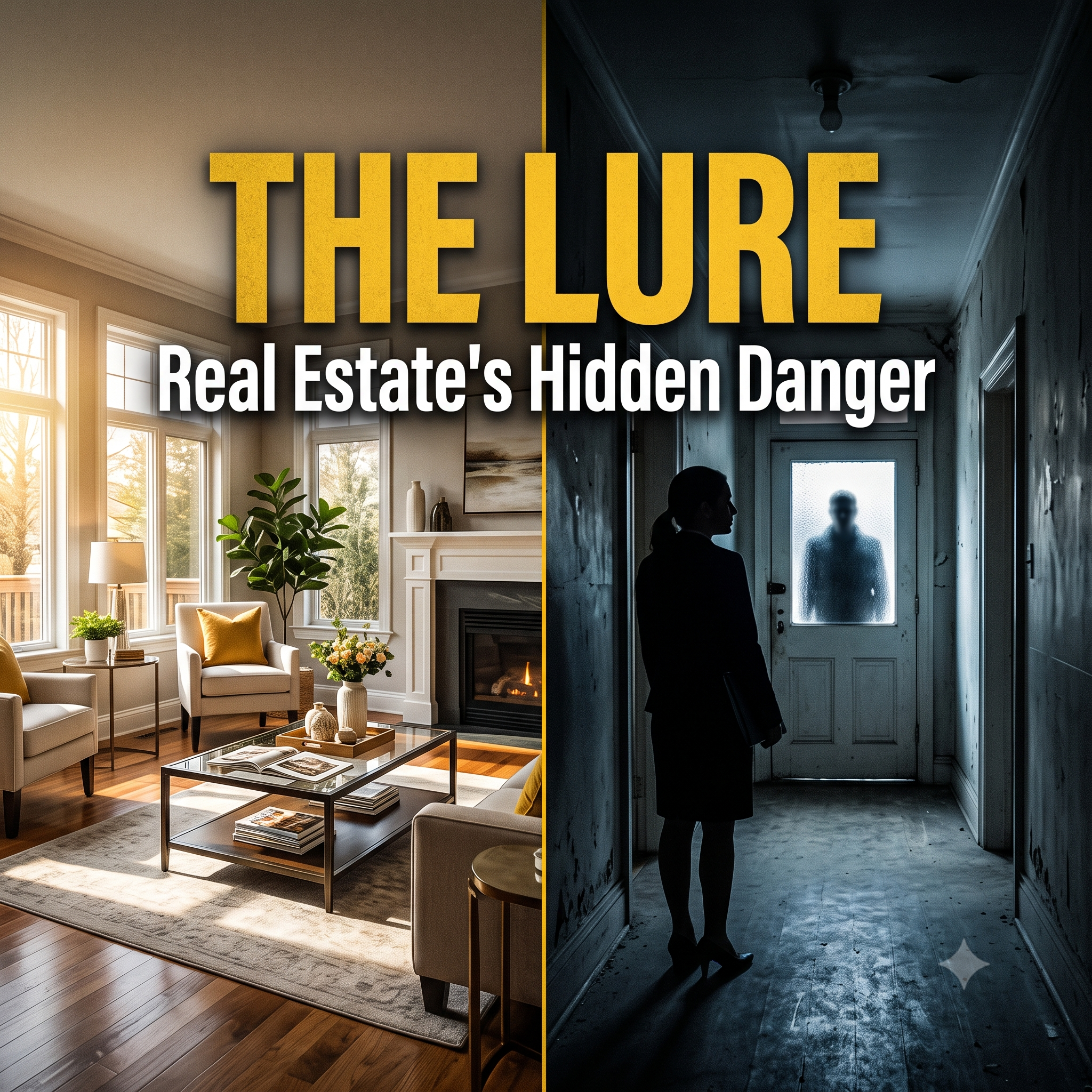
[00:00:40] Speaker A: Okay, let's unpack this. Because if you ask anyone on the street what they think of when they hear real estate, they're probably picturing binge worthy HGTV home tours. Right? Crisp blazers and those giant novelty keys at closing.
[00:00:54] Speaker B: Yeah, the Instagram ready version of the job.
[00:00:57] Speaker A: Exactly. It looks like this world of endless optimism and beautifully staged living rooms.
But behind that welcoming exterior is a sobering, genuinely terrifying vulnerability that almost no one outside the industry actually talks about.
[00:01:12] Speaker B: And that vulnerability is exactly what we are dissecting today in this deep dive. We are looking at the systemic occupational hazards faced by real estate agents and property managers and how a movement called the Midnight Journal is fighting to overhaul this industry's deeply entrenched culture of risk.
[00:01:29] Speaker A: Because we are talking about the professionals who keep the gears of the entire housing ecosystem turning, yet they operate without the absolute basic safety nets we expect in like almost every other public facing career.
[00:01:42] Speaker B: I mean, you think about it, we're not just talking about statistics here. We are talking about the very real people who make this economy function. And they are doing it with massive physical exposure.
[00:01:51] Speaker A: I want to start with how this vulnerability isn't just a fluke. It's not just bad luck. It is literally baked into the business model itself.
[00:01:57] Speaker B: It really is the standard model is the vulnerability.
[00:02:00] Speaker A: Because if you're a real estate agent, your success and basically your ability to feed your family relies entirely on speed and accessibility.
A lead comes in, you have to be the first one to answer the phone, Right?
[00:02:12] Speaker B: The speed to lead is everything.
[00:02:13] Speaker A: And then you're expected to immediately meet that prospective buyer at an unoccupied property. But hold on, if I work at, say, a jewelry store, the company installs panic buttons, they put up bulletproof glass, and they hire an armed security guard.
[00:02:28] Speaker B: Yeah, it's a completely different standard.
[00:02:30] Speaker A: So why on earth are real estate agents just sent out into the wild totally alone?
[00:02:35] Speaker B: Well, it comes down to a structural loophole in how the industry operates. Specifically the independent contractor model. The vast majority of real estate agents are 1099 contractors. They aren't W2 employees of those massive brokerages whose logos are plastered all over their yard signs.
[00:02:52] Speaker A: Wait, so the brokerage isn't technically their employer?
[00:02:55] Speaker B: Exactly. The brokerages provide the branding, you know, the marketing platform, maybe some desk space.
But legally speaking, agents are essentially their own small businesses. And this is crucial because it shifts the entire burden of safety, of liability, and of overhead directly onto the individual agent.
If a massive national brokerage were to mandate and provide strict security equipment or physical safety protocols, they actually risk crossing
[00:03:23] Speaker A: a legal line into an employer employee relationship.
[00:03:26] Speaker B: Precisely. And that would trigger massive tax liabilities, health benefits, overtime pay, all of it.
[00:03:32] Speaker A: So to protect their profit margins and just avoid that liability entirely, the corporate level largely distances itself from the day to day physical operations.
[00:03:42] Speaker B: Yes. The agent is left to just figure it out themselves. And this creates a massive blind spot that predators have learned to exploit through something known as the lure setup.
[00:03:50] Speaker A: The lure setup?
[00:03:51] Speaker B: Yeah, the lure setup. It plays on the psychological paradox of the real estate industry because the exact traits that make someone a great real estate agent, you know, immediate availability, extreme trust, and just an eagerness to please. Those are the exact vulnerabilities of predators looking for.
[00:04:06] Speaker A: They weaponize the job description against them.
[00:04:08] Speaker B: Exactly. In a lure setup, the predator doesn't have to pick a lock, they don't have to bypass a high tech alarm system, and they don't have to fight a security guard.
[00:04:17] Speaker A: They literally just have to make a phone call and say, hey, I want to buy a house.
[00:04:20] Speaker B: That's it. That's the entire breach of security. The professional is lured into an isolated trap under the guise of standard expected business practice.
The prospect of a lucrative financial transaction just completely normalizes behavior that in any other context we would universally recognize as highly dangerous.
[00:04:40] Speaker A: It's a bit like online dating. Right? But instead of meeting a total stranger at a crowded, well lit coffee shop in the middle of the day, your job requires you to meet them completely alone at an empty property in the woods.
[00:04:52] Speaker B: Yeah. With zero security.
[00:04:53] Speaker A: And the tragic case of Monique Bao in Minnesota really illustrates the horrifying simplicity of this mechanism. We are not talking about some elaborate cinematic heist here. Oh, not all the tools used to orchestrate a fatal ambush against her were just a burner phone and a fake showing request.
[00:05:09] Speaker B: Just a disposable phone and the promise of a commission check. That's all it took. And the awful Reality is, she wasn't an isolated case.
Consider what happened to Vivian Martin, Ohio.
[00:05:21] Speaker A: Right.
[00:05:21] Speaker B: She was another completely innocent professional who was targeted for no other reason than her job demanded she enter a vacant space with an unverified client. These women weren't taking reckless, crazy risks. They were simply doing what their industry told them they needed to do to be successful.
[00:05:39] Speaker A: Because the promise of the sale is essentially designed to override your primal instinct for safety.
[00:05:43] Speaker B: It really is. You're told to push past the discomfort to get the deal done.
[00:05:47] Speaker A: But I want to pivot here for a second, because the danger isn't just isolated to agents showing vacant homes to fake buyers. It extends far beyond that into the realm where people already live. We need to look at the front lines of property management.
[00:06:00] Speaker B: Oh, absolutely. That is a completely different but equally volatile landscape of risk. Property managers aren't just dealing with empty houses. They are dealing with occupied, breathing communities.
[00:06:12] Speaker A: Right. They operate as the front lines of community administration, which means they frequently absorb these incredibly high stress, emotionally charged confrontations.
[00:06:23] Speaker B: Yeah, because you are dealing with the most intensely personal space a human being has. Their home. You're the one enforcing the rules where people sleep, where they eat, where they raise their kids.
[00:06:34] Speaker A: And that administrative enforcement can trigger explosive reactions. I mean, property managers aren't just handing over keys to happy new tenants. They are issuing lease violations. They're managing community standards, and they are executing evictions.
[00:06:48] Speaker B: They are dealing with people who might literally be facing the lowest, most desperate point in their entire lives.
[00:06:54] Speaker A: And the consequences of just doing those routine daily tasks can be fatal. Take Cameron Mason in Georgia. His life was taken simply because he asked non residents to leave a complex swimming pool after hours over a swimming pool. Yes. He was just enforcing a basic community rule, something property managers do a dozen times a week, easy. And it escalated to murder.
[00:07:13] Speaker B: It just highlights how rapidly a completely standard interaction can turn lethal when you are the sole authority figure on the ground.
And then there is the incredibly tragic murder of Aurelia Castle Anderson in Sacramento. Right. Yes. Right outside her leasing office and her offense. She was just executing mandatory HUD unit sizing regulations.
[00:07:35] Speaker A: See, I think a lot of people hear HUD unit sizing regulations, and their eyes just kind of glaze over.
What exactly does that mean in practice for a property manager?
[00:07:44] Speaker B: Basically, it means she was bound by strict federal housing laws that limit how many people can legally occupy a specific apartment. These laws are usually designed to prevent severe overcrowding and unsafe living conditions. Okay, so if a family of seven tries to move into a tiny one Bedroom apartment. The property manager is legally obligated by the federal government to say no or to force a relocation. Aurelia wasn't making arbitrary, mean demands. She was enforcing federal law.
[00:08:11] Speaker A: So she had to look a family in the eye and tell them something they desperately did not want to hear about their own living situation.
[00:08:17] Speaker B: Exactly. And if we connect this to the bigger picture and look at the federal data regarding these types of interactions, the statistics are staggering.
We're talking about tens of thousands of non fatal crimes every single year directed at these professionals.
[00:08:33] Speaker A: Tens of thousands?
[00:08:35] Speaker B: Yes. Assaults, robberies, armed threats, and dozens of fatal workplace injuries yearly. Yet they perform their duties as community advocates and economic facilitators without the partner protocols or security personnel that are standard in other industries.
[00:08:51] Speaker A: But wait, if these management companies own multimillion dollar apartment complexes that are pulling in huge rents every single month, why aren't they providing security personnel? Even a local bank branch with a fraction of that daily foot traffic has a guard.
[00:09:04] Speaker B: It comes back to the margins. And really the normalization of risk in property management. Security personnel are incredibly expensive, and they're often viewed by corporate ownership as a hit to the bottom line rather than a necessary operational cost.
[00:09:17] Speaker A: Right. It's just an expense to them.
[00:09:19] Speaker B: Yeah. So the industry standard is largely reactive. Until a massive lawsuit happens or a tragedy hits a specific property, the default is to just let the manager handle things alone.
[00:09:29] Speaker A: So whenever one of these tragedies happens, whenever an agent or a property manager is killed on the job, it makes the local news for what, a few days? People are shocked. There is an outpouring of thoughts and prayers on social media, and then the mainstream media cycle just moves on without failing. It leaves the families grieving and the industry just quietly resets to business as usual. How is it possible that an industry dealing in billions of dollars a year hasn't revolutionized its safety protocols?
[00:09:57] Speaker B: That exact cycle, that temporary outrage followed by systemic amnesia, is what birthed the Midnight Journal.
[00:10:03] Speaker A: Right.
[00:10:03] Speaker B: It's an advocacy podcast and a broader initiative founded on the absolute refusal to let these stories be swept under the rug anymore. The creator saw this intersection of essential public service and extreme personal sacrifice and recognized it needed a dedicated, unrelenting spotlight.
[00:10:18] Speaker A: And what I appreciate about the Minute Journal is that it doesn't just list off crime statistics. It starts by intensely humanizing the people involved. Because it is so easy for a local news anchor to reduce someone like Beverly Carter or Monique Bao or Cameron Mason to just, you know, a tragic real estate deaths.
[00:10:38] Speaker B: Yes, absolutely. When we reduce them to statistics, it Abstracts the violence. It makes it a math problem instead of a human crisis.
[00:10:46] Speaker A: Exactly.
[00:10:46] Speaker B: The Midnight Journal insists on remembering them as dedicated mothers, community leaders, and hardworking individuals who are just trying to provide for their families. You have to force the industry to look at the real human cost of its negligence before you can even demand change.
[00:11:00] Speaker A: Which leads right into how they actually challenge the industry's current response. Because from what I understand, the traditional response to safety in real estate has been pretty pathetic. It's essentially what we can call generic checklist advice.
[00:11:11] Speaker B: Oh, that's a perfect way to describe it.
[00:11:13] Speaker A: Yeah.
[00:11:13] Speaker B: For decades, the industry's idea of safety training has been telling agents to just trade your gut or park your car on the street so you can't get blocked in the driveway. Or make sure you tell someone where you're going.
[00:11:26] Speaker A: Right. Keep your phone charged. But here is my issue with that.
It subtly shifts the blame onto the victim if an agent is attacked. The subtext of that generic advice is, well, you should have trusted your gut more. You shouldn't have parked in the driveway.
[00:11:41] Speaker B: Exactly. It individualizes a systemic problem. It is cheap, liability free advice that does absolutely nothing to stop a coordinated predatory lure setup.
[00:11:52] Speaker A: Right.
[00:11:52] Speaker B: Parking your car on the street is completely irrelevant if a predator has used a burner phone to lure you inside the house and lock the door behind you. The Midnight Journal fosters incredibly uncomfortable conversations about the total inadequacy of these checklists.
[00:12:06] Speaker A: So if the checklists are useless, what is the actual solution here? Because here's where it gets really interesting. We are talking about an industry responsible for guiding people through the most significant financial transactions of their entire lives.
Why hasn't systemic tech enabled security become the absolute baseline?
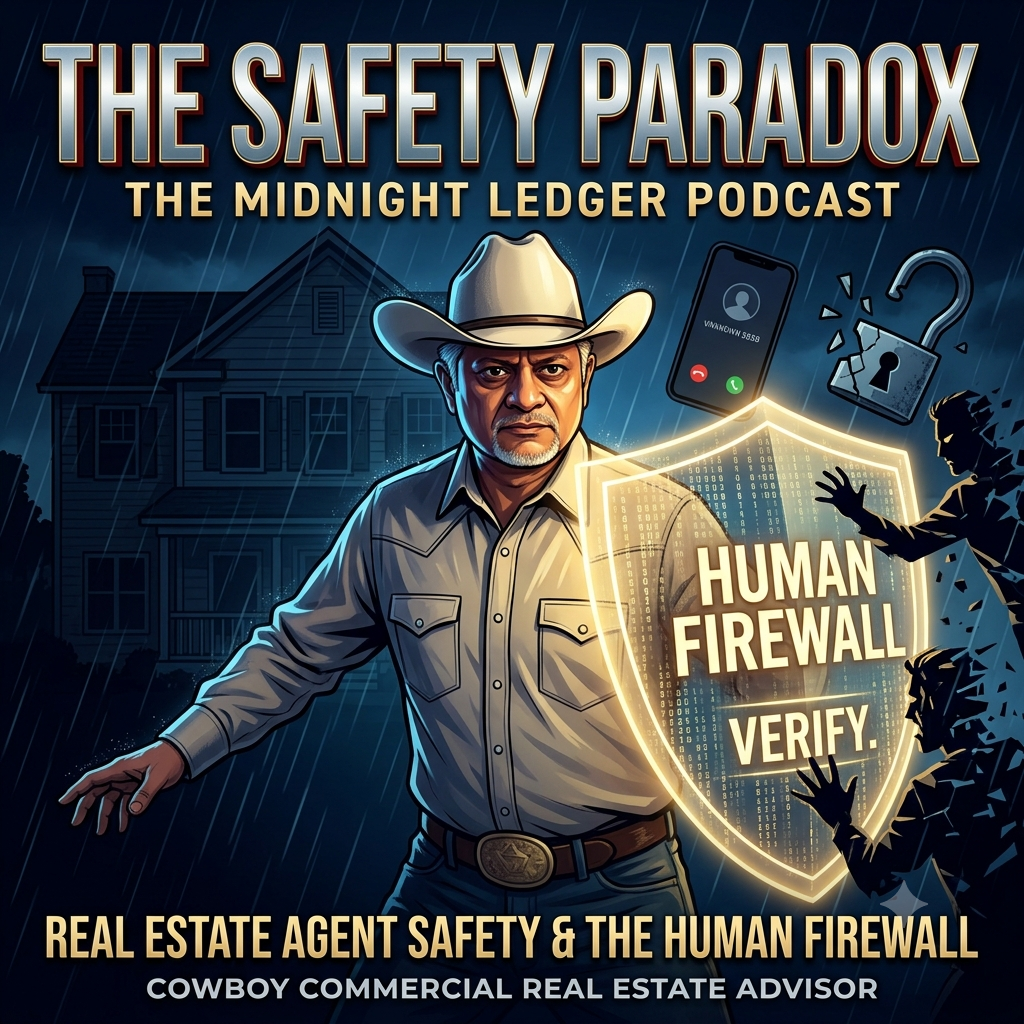
[00:12:24] Speaker B: That is the ultimate push of the Midnight Journal. They're demanding practical, tech driven reform. They're turning their platform into a hub where veteran agents, law enforcement and safety experts are calling for mandatory industry wide protocols. And the biggest one is mandatory client identity verification.
[00:12:42] Speaker A: But wait, wouldn't mandatory background checks or ID verifications absolutely kill the speed of the real estate market?
We just established that an agent's livelihood depends on jumping up and meeting a client in 20 minutes.
If I'm a buyer and an agent demands I upload my government ID before they'll even agree to meet me, I might just get annoyed and call the next agent on Zillow.
[00:13:04] Speaker B: And that is the exact friction that has prevented adoption. Agents are terrified of losing the commission by introducing any friction to the customer experience.
[00:13:12] Speaker A: Right. They don't want to lose bleed.
[00:13:13] Speaker B: But that is why the Midnight Journal argues it cannot be left up to the individual agent. It has to be an institutional, industry wide mandate.
If every single brokerage requires ID verification as a baseline rule, the consumer has no choice but to comply.
[00:13:28] Speaker A: Just like renting a car. I can't just walk up to a rental counter, refuse to show my driver's license, and expect them to hand me the keys to a $50,000 vehicle. So why should a stranger get access to a $500,000 home with just a text message?
[00:13:42] Speaker B: Exactly. And the technology to solve this already exists. It's not sci fi. We have APIs that can scan and verify government ID in seconds.
[00:13:51] Speaker A: Wow. Yeah.
[00:13:52] Speaker B: We have softw real time location tracking that ties directly into emergency dispatch. And that goes miles beyond just having a cheap panic button on a keychain.
It can instantly share a GPS ping, a live audio feed, and the verified identity the person the agent is supposed to be with, straight to 9 11.
[00:14:09] Speaker A: So the goal is to shift the burden of safety completely off the individual agent's quote, unquote gut feeling, and place it firmly onto a systemic, non negotiable protocol.
[00:14:18] Speaker B: Precisely.
The technology is designed to actively prevent the tragedy by removing the anonymity that predators rely on. Instead of just teaching agents how to throw a punch when the tragedy is already unfolding, it's a massive shift from a culture of individual awareness to a culture of institutional accountability.
[00:14:36] Speaker A: Which brings us to why this matters to you, the listener. Because even if you don't work in real estate, even if you have absolutely no intention of ever showing a house or managing an apartment complex, these professionals provide an invaluable service to the fabric of our society.
[00:14:52] Speaker B: They really do. They are the local economic facilitators who are guiding families through what is often the most stressful financial hurdle of their entire lives.
[00:15:01] Speaker A: Every time an agent opens a door or a property manager walks a complex to enforce safety rules, they are helping to build stable neighborhoods. They are keeping affordable housing platforms actually running. Recognizing their work means we have to stop ignoring the severe physical risks they take on our behalf.
[00:15:17] Speaker B: And if we want to ensure we have a functioning housing ecosystem moving forward, that recognition has to translate into action.
Which is why there's a very clear path forward for anyone listening who wants to help change this culture.
[00:15:31] Speaker A: Yes, the call to action here is direct support, the mission of the Midnight Journal. Subscribe to their podcasts, leave a review so their algorithm reach expands, and most importantly, to share this information.
Bring it up with colleagues, send it to your local brokerages, and force the conversation at real estate board meetings. The goal is to turn public awareness into an inescapable pressure campaign for tangible protection.
[00:15:55] Speaker B: Because the only alternative is holding our breath and waiting for the next headline, the next grieving family, and the next round of empty corporate statements. But as we close out this deep dive, I want to leave you with one lingering thought about the ultimate cost of this reform. We've established that mandatory ID verification and strict security protocols are desperately needed to protect these workers. But if the housing industry finally implements these sweeping fortress like security measures just to get a foot in the door, what happens to housing accessibility?
If we mandate background verifications and digital IDs just to view a property, do we accidentally create a massive systemic barrier to entry for marginalized, unbanked or first time buyers? Where's the line between maintaining an open, accessible housing market and building an impenetrable fortress just to keep the people working inside it alive? But the analysis doesn't stop here. If you want to dive deeper into the data before the next bell rings, make sure to hit that subscribe or Follow button right now in your favorite podcast app. If you found value in tonight's reporting, leave us a five star review.
It helps other listeners find their way to the table.
For exclusive updates, show notes and deep dives, visit our
[email protected] until next time, stay sharp and keep your books balanced.