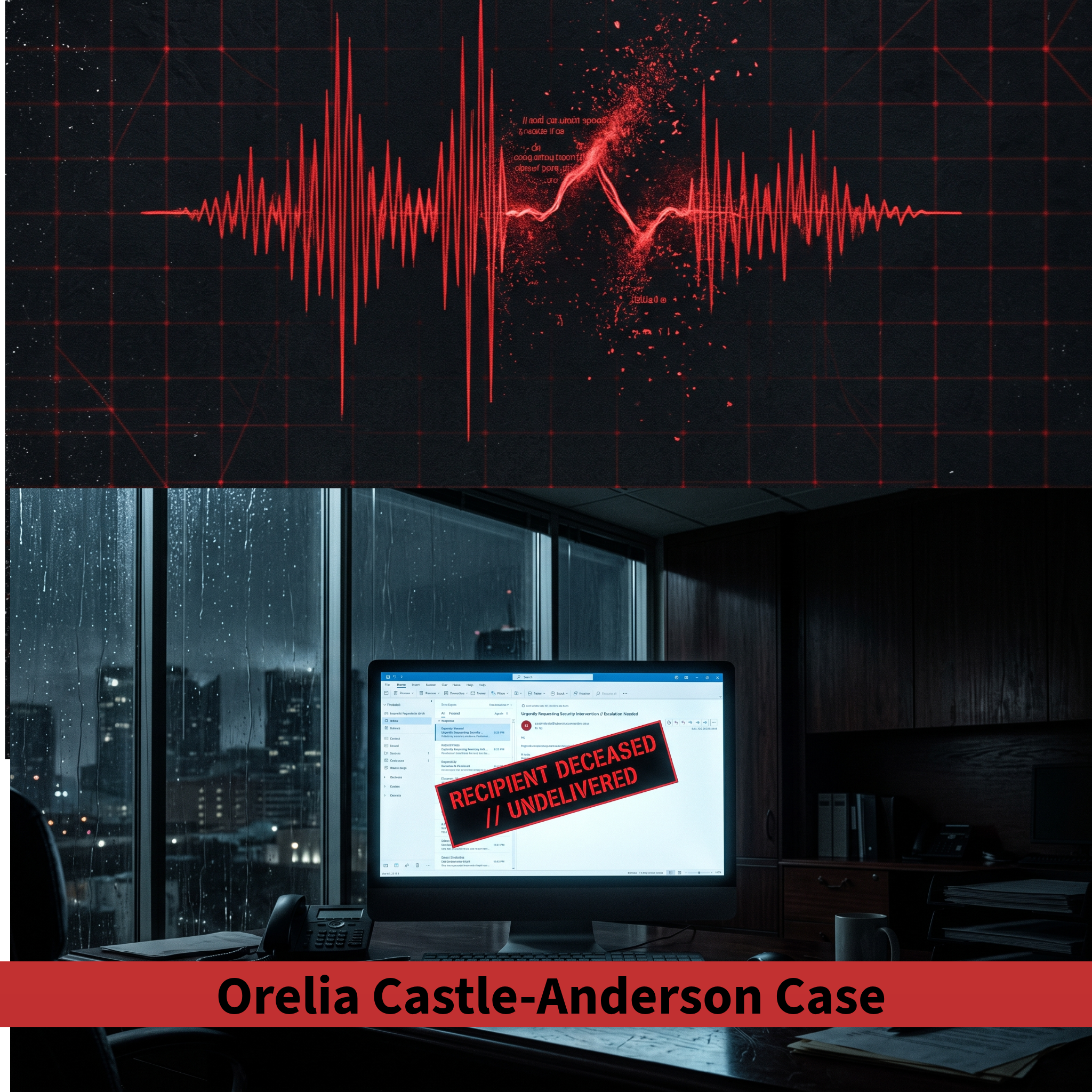
[00:00:00] Speaker A: A routine federal housing mandate, a dedicated property manager, a 30 year tenant, and, well, a fatal administrative blind spot that culminated in a deadly shooting on July 29, 2024.
[00:00:14] Speaker B: Right. We are opening the private case files of lead investigator Priyanshu Adithakar to those who follow his intelligence briefings.
[00:00:22] Speaker A: And this is a look into the dark architecture of property management, where paperwork errors do not just kill deals.
[00:00:29] Speaker B: Exactly. They. They create environments of unmitigated physical risk. The corporate mechanisms designed to protect assets and people. You know, they often contain silent catastrophic flaws.
[00:00:39] Speaker A: Yeah.
[00:00:40] Speaker B: When you examine the operational data, the predictability of these failures is chilling. We are looking at a system functioning exactly as it was programmed to function right up until the moment it resulted in a casualty.
[00:00:50] Speaker A: By the end of this deep dive into Pree's private case files, you will understand the exact mechanics of the downsize trap. It's a lethal corporate blind spot. And you'll learn how to stress test your own commercial real estate portfolio against a staggering 96% critical failure rate.
[00:01:05] Speaker B: Right. Because this is about identifying the invisible trip wires in your operational workflow before they are triggered by the people standing on the front lines.
[00:01:13] Speaker A: Let's break down the core mechanics of Pre's findings inside the ledger.
[00:01:16] Speaker B: We have to start with the physical environment. Right. And the people trapped within it. We. We are looking at Caselog Castle 20240729.
[00:01:26] Speaker A: Okay.
[00:01:26] Speaker B: The location is Cardosa Village in South Sacramento, California, which is a HUD subsidized affordable housing complex. It is managed by the Retirement Housing foundation, or rhf.
[00:01:38] Speaker A: Right.
[00:01:38] Speaker B: To understand the failure, you first have to understand the rigid parameters of subsidized housing.
[00:01:43] Speaker A: Yeah. And at the center of this highly regulated environment is Aurelia Castle Anderson. She was a Sacramento State graduate with a degree in social work. Right. Looking at her background, this wasn't just a job for her. As a vocation, she had a deep documented passion for helping vulnerable communities, particularly elders. And in 2020, she was promoted to property manager at Cardoso Village. So she was the boots on the ground, the face of the corporate management for the residents who live there.
[00:02:11] Speaker B: In this report, Pry uncovers the tragic irony of her position.
You have a professional trained in social work, dedicated to community uplift, who is suddenly forced by her role to act as a strict enforcer of high friction
[00:02:24] Speaker A: federal guidelines, placed in a position where her fundamental mandate to manage the property's compliance directly contradicted her. You know, her professional instinct to protect the residents.
[00:02:34] Speaker B: And the friction in this specific case centered on a single tenant, Leslie Weigert, 66 years old. He had lived at Cardosa village for nearly three decades.
[00:02:45] Speaker A: 30 years in the exact same two bedroom unit.
[00:02:47] Speaker B: Right. That is not just an apartment. That is the geographic center of this man's entire life.
[00:02:52] Speaker A: Yeah, but the HUD compliance mandate is rigid, and it operates on mathematical efficiency, not human attachment.
[00:02:59] Speaker B: Because Weickert no longer had dependents living with him, federal rules dictated that his household composition had changed.
[00:03:06] Speaker A: Right. Under HUD guidelines, he was officially classified as overhoused.
So the protocol required him to relinquish his two bedroom unit and move into
[00:03:14] Speaker B: a one bedroom so a larger family from the notoriously long Section 8 waitlist could be accommodated.
[00:03:19] Speaker A: Which, I mean, the underlying logic of that federal policy makes sense on a macro level. Right. We have a housing crisis, sure. Optimizing subsidized housing for those who need this space is a utilitarian necessity.
But on the micro level, at the point of enforcement, the psychological toll is. Is highly destabilizing.
[00:03:37] Speaker B: You are uprooting a senior citizen from a sanctuary he has known for 30 years.
[00:03:42] Speaker A: I need to interject here because looking at standard underwriting models, I see a massive disconnect.
[00:03:47] Speaker B: How so?
[00:03:48] Speaker A: Well, on a financial model or an asset manager's quarterly report, this event is coded simply as an involuntary unit downsize. It's just a reallocation of square footage to maximize federal subsidy capture. Right, but operationally, aren't we asking a solo property manager to essentially evict a senior citizen from his home of three decades without any contract security, physical backup, or a specialized de escalation support?
[00:04:12] Speaker B: That is precisely the structural fracture that price intelligence highlights. A financial model assumes compliance is a frictionless event.
[00:04:20] Speaker A: It assumes a formal notice is printed, a letter is sent, and the tenant rationally packs his boxes and moves across the hall.
[00:04:27] Speaker B: Exactly. It completely ignores the human volatility of stripping someone of their long term sanctuary. It assumes that authority alone is enough to ensure compliance.
[00:04:37] Speaker A: And the pressure at Cardosa Village built up over weeks. This wasn't a sudden, unpredictable snap. It was a slow, grinding escalation of hostility over the relocation mandate.
[00:04:49] Speaker B: Pre's investigation into the ledger shows that Weickert, a man who had absolutely no prior criminal record in his entire 66 years, reached a catastrophic flashpoint.
[00:04:59] Speaker A: The dispute over the unit sizing ended in the fatal shooting of Aurelia Castle Anderson outside the property on a Monday morning.
[00:05:06] Speaker B: The outcome was devastating, and it rippled outward immediately. Weickert fled the property right after the gunshots. A regional manhunt was launched by the Sacramento County Sheriff's deputies, which ended in his apprehension.
[00:05:17] Speaker A: He was formally charged with homicide and faced his initial court appearance in August 2024.
I mean, the grim reality is this. A 30 year resident with a clean record became a homicide suspect and a dedicated social worker lost her life over. Over a paperwork reclassification.
But here is where his investigation takes a completely unexpected turn. Those warnings were sent, but they vanished into a systemic void. Moving on to our next major pillar, How Priya systematically navigated these operational hurdles.
[00:05:49] Speaker B: The aftermath of the shooting revealed an administrative breakdown that is frankly difficult to process. When you look at the raw data,
[00:05:57] Speaker A: there were clear, documented signals of escalating danger. This was not a crime that occurred in a vacuum.
[00:06:02] Speaker B: No. Another resident at Cardosa Village had actively recognized the physical threat Weykert posed as the eviction pressure mounted.
[00:06:09] Speaker A: And this concerned resident actually took action. They didn't just observe, they intervened. They emailed corporate management specifically on Cassel
[00:06:16] Speaker B: Anderson's behalf, detailing the escalating hostility.
[00:06:19] Speaker A: Right. They laid out the safety fears. They were actively begging for corporate intervention to protect the property manager.
[00:06:25] Speaker B: The warning messages were routed to a designated corporate executive inbox at rhf.
From a standard compliance and auditing standpoint, the resident followed the exact protocol designed by the corporation.
[00:06:37] Speaker A: They saw a threat, they reported it to the established channel and they hit send.
[00:06:41] Speaker B: Exactly.
[00:06:41] Speaker A: Wait, I have to push back here. In a modern corporate environment, how does an inbox just die if an email address is no longer in use? Aren't there automated bounce backs?
[00:06:51] Speaker B: You would assume so.
[00:06:52] Speaker A: I mean, how does it or human resources not catch an unmonitored executive alias for weeks or even months?
[00:07:00] Speaker B: That is the exact blind spot. It was in a deleted inbox. It was a dormant endpoint. The vice president who was assigned to monitor and manage that that specific executive inbox had passed away.
[00:07:11] Speaker A: Right. So no bounce back is ever triggered.
[00:07:13] Speaker B: Correct. The system does not know the executive has died. It only knows the storage quota isn't full. You know, the HR and IT offboarding process missed the specific alias rerouting for this safety channel.
[00:07:24] Speaker A: So the corporate system just hummed along, operating under the assumption that the safety net was fully functional.
[00:07:29] Speaker B: Yeah, it's like installing a state of the art fire alarm system in a high rise building. But the wire connecting it to the fire department was severed months ago.
[00:07:37] Speaker A: The alarm is screaming in the hallway. The tenants are pulling the lever, but on the other end, total silence.
[00:07:44] Speaker B: How? Pre saw what the spreadsheets missed is by looking at the architecture of the communication routing itself, management assumed their safety net was intact.
[00:07:52] Speaker A: Right. They assumed that because an inbox existed on a server architecture, it was functioning as a protective measure.
[00:07:58] Speaker B: In reality, they failed to realize that a single point of failure, the death of one executive, had completely bypassed their entire emergency escalation workflow.
[00:08:08] Speaker A: So it was an unmonitored inbox. The email sat there accumulating completely unread.
Zero safety warnings ever reached active living management.
[00:08:17] Speaker B: The people who actually had the authority to intervene, to deploy contract security, or to temporarily pause the HUD eviction process until tempers cooled had no idea the threat existed because the vital data was trapped in a dead letter void.
[00:08:30] Speaker A: If we connect this to the bigger picture of institutional investment, this is a terrifying vulnerability. You have high stakes human enforcement happening on the ground level, and your corporate safety monitoring relies on an unverified unit, unmonitored digital endpoint.
[00:08:47] Speaker B: Which brings us to the broader market implications. Right, and why this matters to capital allocators far beyond California.
[00:08:55] Speaker A: Exactly. What Prey is reporting from the ground in central Ohio is that these administrative vulnerabilities, these dead letter anomalies, are not isolated incidents localized to Sacramento.
[00:09:05] Speaker B: Right. Pry tracks macro shifts and micro market nuances across central Ohio and the wider Midwest.
His intelligence proves that these exact structural riddles are embedded in portfolios everywhere.
[00:09:16] Speaker A: And this is exactly why conventional underwriters often walk away from deals, or worse, blindly inherit massive liability when they acquire a new portfolio.
[00:09:26] Speaker B: Because they rely entirely on financial abstraction.
[00:09:28] Speaker A: Let's define what that abstraction looks like for a second. When investors evaluate a property, they look at cap rates, capitalization rates, to gauge the expected rate of return on the investment.
[00:09:37] Speaker B: Or they look at revpar revenue per available room. If they are analyzing a hospitality asset.
[00:09:43] Speaker A: Right, they obsess over net operating income, which is just the cash lev after basic operating expenses. Yeah, they only look at the money making math.
[00:09:51] Speaker B: Precisely. They do not audit the emergency communication routing. They do not ask who is actively monitoring the alias inbox. When a tenant dispute inevitably escalates, they
[00:10:01] Speaker A: assume corporate infrastructure is a constant, stable variable.
[00:10:05] Speaker B: But Pry operates with a highly specific dual authority, which is why his case files read differently than a standard underwriter's report.
[00:10:13] Speaker A: He is an institutional commercial real estate investment advisor, but he is also a boots on the ground realtor.
[00:10:19] Speaker B: That means he understands the high level capital allocation and the boardroom strategy. But he also knows exactly what it feels like to stand in a dimly lit hallway and deliver life altering bad news to a tenant.
[00:10:30] Speaker A: He bridges the gap between the boardroom abstraction and and the property line reality.
[00:10:34] Speaker B: That dual perspective is what allows him to Construct the exposure models found in his files.
He doesn't just look at what a property earns. He looks at how a property breaks.
[00:10:44] Speaker A: Let's examine the HUD compliance dispute exposure simulator that Pre developed.
[00:10:49] Speaker B: As Pre points out, in this week's perspective, affordable housing managers are routinely tasked with enforcing high friction regulations, Lease terminations, aggressive income audits, involuntary downsizing, and they're
[00:11:02] Speaker A: almost always doing it completely solo.
[00:11:05] Speaker B: Let's walk through the specific variables pre inputted into this simulator based on the Cardosa Village incident. Because this is where the math becomes incredibly revealing. It is not just about adding risk. It is about how these variables multiply each other.
[00:11:19] Speaker A: Variable one is the enforcement mandate. In this case an involuntary unit downsize and reallocation. This establishes the baseline friction.
[00:11:28] Speaker B: The simulator assigns a baseline risk to that mandate because you are threatening a resident's shelter.
[00:11:32] Speaker A: Then Pre inputs Variable 2, the on site escort protocol. Here we have a solo property manager.
[00:11:38] Speaker B: There is no contract security present. There is no law enforcement escort.
[00:11:42] Speaker A: So now the simulator multiplies the risk.
You take the high friction mandate of a forced eviction and you multiply it by the physical isolation of a solo property manager.
[00:11:52] Speaker B: The vulnerability is compounding.
[00:11:54] Speaker A: And then we reach the critical third variable, the corporate inbox protocol.
[00:11:59] Speaker B: This is a multiplier that pushes the entire system into the red zone. Instead of a central monitored help desk with ticket tracking or a 24. 7 priority safety escalation team, the input is an unmonitored single point dead letter inbox.
[00:12:14] Speaker A: When Pre runs those specific operational and communication vectors through the simulator, it essentially removes the safety floor entirely.
[00:12:21] Speaker B: The compounding failures generate a chilling result. A calculated safety exposure index of critical 3. 96%.
[00:12:28] Speaker A: That 96% is not a random arbitrary number. It represents the near mathematical certainty that an escalating threat will bypass corporate intervention and result in a physical confrontation.
[00:12:40] Speaker B: What is fascinating here is that this isn't a measure of financial risk in the traditional sense. It is a measure of physical workplace threat exposure.
[00:12:47] Speaker A: Pre mathematically demonstrates how a standard paperwork oversight failing to redirect an email alias after a single executive's death translates directly to severe liability and imminent physical danger.
[00:12:59] Speaker B: On the ground, it forces a total reevaluation of how risk is calculated during due diligence. You cannot just underwrite the building. You have to underwrite the operational safety net.
[00:13:09] Speaker A: The Aurelia Castle Anderson case is a grim masterclass in what happens when standard federal compliance collides with broken corporate emergency escalation workflows.
The bottom line of Pree's leisure today is Stark. A 30 year resident with no criminal record became a homicide suspect because systemic safety channels failed a solo social worker.
[00:13:31] Speaker B: For the institutional owners, private equity groups and elite developers analyzing their own portfolios, the directive is absolute. You must immediately audit your communication routing. You have to remove single point of failure inboxes across your entire operational footprint.
Implement 247 priority safety escalation teams with active ticket tracking.
[00:13:51] Speaker A: Because when you mandate high stakes human compliance through low support operational channels, you aren't just risking capital, you're risking lives. So look at your own properties. What dead letter inboxes are sitting unmonitored in your portfolio right now, but the analysis doesn't stop here. If you want to dive deeper into the data before the next bell rings, make sure to hit that subscribe or Follow button right now in your favorite podcast app.
If you found value in tonight's reporting, leave us a five star review.
It helps other listeners find their way to the table.
For exclusive updates, show notes and deep dives, visit our
[email protected] until next time, stay sharp and keep your books balanced.