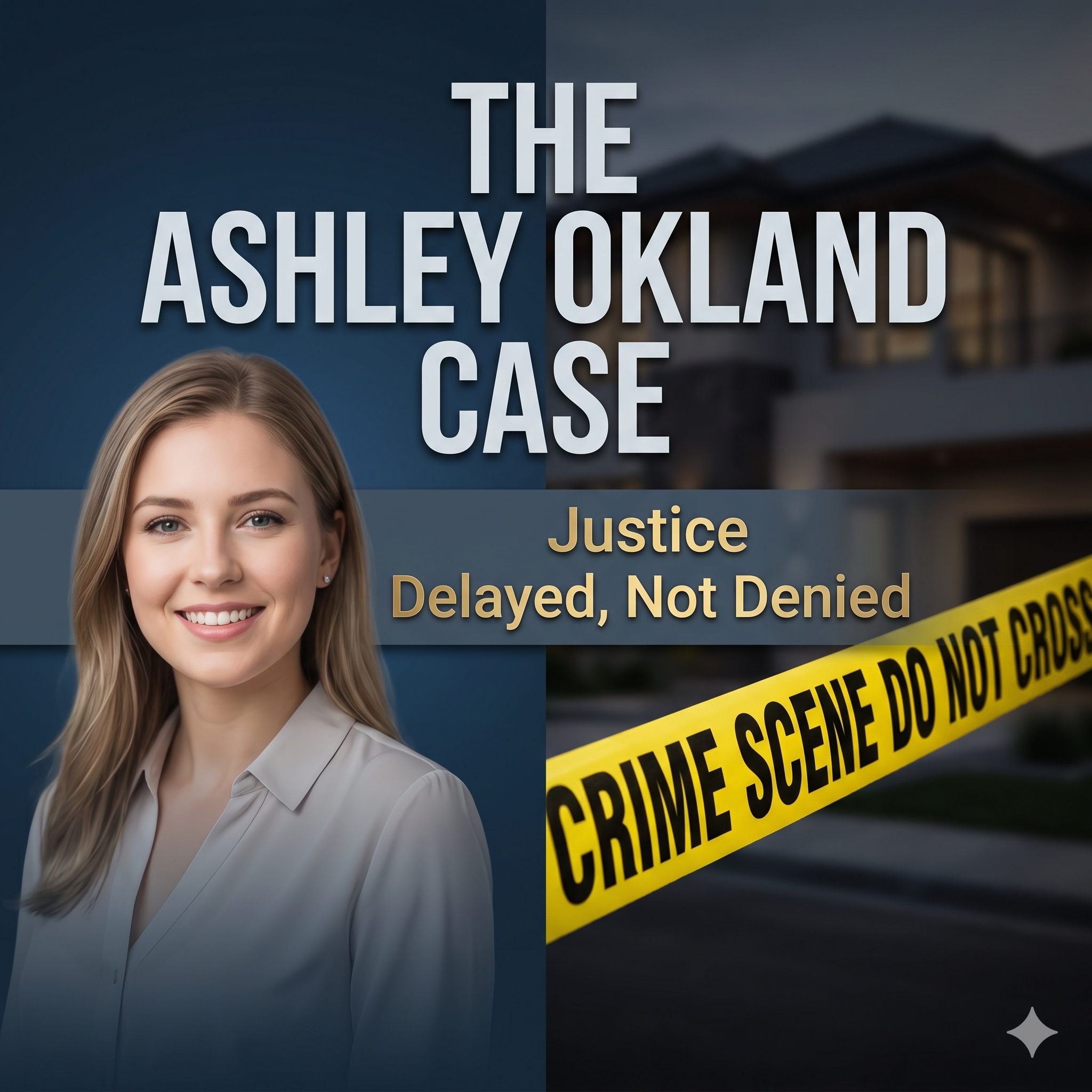
[00:00:00] Speaker A: From the shadows of the city, where the data meets the dark. You are listening to the Midnight Ledger, presented by Ruby Hart and Hank Tanner.
[00:00:09] Speaker B: Imagine you're an investor, right? You're looking at this massive commercial real estate portfolio. You're staring at blueprints, architectural renderings, those glossy brochures promising astronomical returns on boutique hotels.
[00:00:24] Speaker C: Right? Pristine developments, the whole package.
[00:00:25] Speaker B: Exactly. But today, well, you're sitting in the room with us as we open a very different kind of file. We're acting as investigative producers for this deep dive. Pulling back the curtain on these private case logs to look at what's actually buried in the foundation of these properties.
[00:00:42] Speaker C: Because it's rarely what's on the brochure.
[00:00:44] Speaker B: No, it's not. We're talking about the unseen risks, the silent histories, the human elements that can, I mean, completely shatter a multimillion dollar investment.
[00:00:54] Speaker C: It's a radically different way to view real estate. And that's why we are opening the private case files of Priyanshu Adifakar, who
[00:01:01] Speaker B: goes by Pre in the industry.
[00:01:02] Speaker C: Right? Yeah, Pre. He is the lead investigative reporter behind the Midnight Ledger. But what you really have to understand here is that Pre is not. He's not your traditional true crime detective. And he's not just a journalist either. He is a high level investment advisor. He buys and sells hotels. He consults for elite boutique investors.
[00:01:21] Speaker B: He.
[00:01:21] Speaker C: He's a peer to fellow realtors.
[00:01:23] Speaker B: So he's on the inside.
[00:01:24] Speaker C: Exactly. So when he looks at a property, he isn't just looking at the financial ledger. He's examining the human ledger.
[00:01:30] Speaker B: The human ledger that is. Well, it's the perfect way to frame this. Pre actually refers to these hidden risks as the ghosts of real estate.
[00:01:38] Speaker C: I love that term.
[00:01:39] Speaker B: It's chilling, but it's accurate.
And the specific file sitting on the desk between us right now is caselog BW2003. 1210.
[00:01:49] Speaker C: A sales office. Silence.
[00:01:50] Speaker B: Right. That's what Pre titles this entry. On the surface, it's this meticulous exploration of a brutal 2003 double homicide.
Two real estate agents, Lori Brown and Cynthia Williams. Yeah, but the core paradox we're unpacking with you today is this. Why is a mastermind, commercial investor, someone dealing in massive hotel portfolios, obsessing over a 20 year old cold case in a suburban cul de sac?
[00:02:12] Speaker C: Well, because for Pre, this case is essentially the Rosetta stone for understanding spatial vulnerability and commercial risk. To understand why I, we really have to look at the environment where this tragedy unfolded. It's the fall of 2003 down in Cobb County, Georgia.
[00:02:28] Speaker B: Okay.
[00:02:29] Speaker C: Lori Brown, she was 21, and Cynthia Williams, who went by Cindip, she was 33. They were working inside a model home sales office.
[00:02:37] Speaker B: And Prizeledger notes something interesting right away here, doesn't it?
[00:02:41] Speaker C: Yeah. He identifies the subdivision as Southampton, but if you look at broader historical records, they often cite it as the Oakland subdivision in Powder Springs.
[00:02:50] Speaker B: I want to focus on the concept of that model home for a second because it's so central to this. Yeah. When you walk into one of these spaces, it feels. It feels like stepping onto a movie set.
[00:02:59] Speaker C: Totally. It's perfectly curated. Right.
[00:03:01] Speaker B: It's meticulously designed to sell this specific suburban dream. The lighting is warm, the furniture staged just right. You've got the fake fruit in a bowl on a pristine kitchen island, the
[00:03:11] Speaker C: ambient music playing softly in the background.
[00:03:13] Speaker B: Exactly. It is engineered to project absolute safety and tranquility. But from a purely structural standpoint, Pride points out this terrifying irony.
[00:03:22] Speaker C: It's an illusion, a very dangerous illusion, because by definition, a model home in a developing subdivision is built before the rest of the community.
[00:03:32] Speaker B: Right. It's the first thing there.
[00:03:33] Speaker C: Yeah. It sits on the edge of empty lots, half paved roads, active construction zones. It is geographically isolated, so it projects
[00:03:42] Speaker B: the image of a bustling, safe neighborhood. But.
[00:03:45] Speaker C: But the reality is that it lacks the natural surveillance of actual neighbors. There's no foot traffic. There are no residents looking out their windows to notice if something is wrong.
[00:03:54] Speaker B: It's a textbook soft target.
[00:03:56] Speaker C: Exactly.
[00:03:56] Speaker B: You have this facade of corporate security, but what you actually have is one or two people completely isolated in a remote, highly accessible structure. Like I said, they're essentially actors trapped on a movie set. And In November of 2003, that vulnerability was exploited in, well, the worst possible way.
[00:04:15] Speaker C: The individual who walked into that sales office was Stacy Ian humphries. He was 30 years old, a convicted felon out on parole.
[00:04:23] Speaker B: And his motive?
It wasn't some complex master plan.
[00:04:27] Speaker C: No, not at all. He wasn't a criminal mastermind. He was drowning in debt. He was suffocating under these high interest payday loans, plus payments on a black Dodge Durango.
[00:04:37] Speaker B: He was desperate.
[00:04:38] Speaker C: Beyond desperate. He walked into that isolated model home driven by just this absolute, chaotic need for quick cash.
[00:04:47] Speaker B: And this is where the reality of that space turns incredibly grim.
Humphries held both women at gunpoint in that quiet backroom.
[00:04:55] Speaker C: Yeah.
[00:04:55] Speaker B: He forced them to strip naked, demanding their bank cards and, you know, forcing them to reveal their ATM PNs.
[00:05:02] Speaker C: The brutality of what followed is. It's harrowing. It really Is the trial evidence showed that Williams was strangled with her own underwear, shot in the back and executed with a headshot. And Brown was struck or choked in the throat before she was also fatally shot in the head. Humphrey stole their driver's licenses, credit cards, their ATM cards.
[00:05:20] Speaker B: And the financial payout for erasing two lives in that model home. Barely $3,000.
[00:05:25] Speaker C: Yeah. He withdrew just over three grand.
[00:05:27] Speaker B: It's a staggering imbalance, and it completely shatters Pre's overarching philosophy, which he defines as transforming properties into profits, dreams into destinations.
[00:05:38] Speaker C: Right.
[00:05:39] Speaker B: That model home was supposed to be a destination for dreams. But Humphreys weaponized its isolation, and he turned it into a nightmare.
[00:05:47] Speaker C: And that collision between the illusion of a secure property and raw human desperation, that is exactly what Pre is analyzing.
[00:05:55] Speaker B: Right.
[00:05:56] Speaker C: But the investigation gets even more complex when we look at the immediate aftermath in the manhunt. Because this is where Pre's methodology as an investigative reporter really diverges from the standard public narrative.
[00:06:07] Speaker B: I noticed that. And I have to admit, looking through Pre Zoom in evidence board, I was genuinely confused by the timeline discrepancies.
[00:06:14] Speaker C: It throws you off at first.
[00:06:15] Speaker B: Yeah. Let's lay out the public historical record first, just to contrast it. So the bodies are found later that same day by a builder. Witnesses had seen a man matching Humphrey's description and a black Dodge Durango at the scene.
[00:06:26] Speaker C: Right.
[00:06:27] Speaker B: Cobb county police try to question him at his home in Dunwoody. And he runs, he flees in a rented Jeep.
[00:06:33] Speaker C: And then the official record takes over.
[00:06:35] Speaker B: Exactly. The official sanitized court record states that on November 8, 2003, which is five days after the murders, Humphries was captured outside Milwaukee, Wisconsin. This is following a 30 minute high speed chase.
Police found the murder weapon, a Ruger 9 millimeter, inside the console.
[00:06:53] Speaker C: And the DNA matched.
[00:06:54] Speaker B: Right? DNA matched. Humphries even confessed telling them, I know I did it. I know it just as well as I know my own name.
[00:07:01] Speaker C: That is the neat chronological bow that the legal system ties around the manhunt.
[00:07:05] Speaker B: Right. But then you look at Pre's private case file.
[00:07:07] Speaker C: Yeah.
[00:07:08] Speaker B: His ledger logs the double murder on December 10, 2003. And he logs the capture on December 11, following a crash in South Carolina.
[00:07:16] Speaker C: Not Wisconsin.
[00:07:17] Speaker B: Not Wisconsin. South Carolina. So stop me here. Why would a lead investigative reporter and a lead advisor whose entire reputation is built on meticulous risk assessment have a ledger with completely alternate chronological and geographical data?
[00:07:30] Speaker C: It seems like a glaring error, Right?
[00:07:32] Speaker A: Yeah.
[00:07:33] Speaker B: Are we looking at dispatch errors? The fog of an initial manhunt?
I mean, why Doesn't Pre just correct his file to match the Wikipedia page?
[00:07:42] Speaker C: Well, because Pre is not interested in the sanitized Wikipedia page. When you are analyzing a crisis from an investment and liability standpoint, the polished final court documents only tell you how the system justified itself after the fact. Oh, I see. Pree's ledger reflects the raw, chaotic layers of the actual event.
Those early frantic police dispatch reports, a suspect fleeing across the Carolina border, the initial confusion of dates. That is the anatomy of a crisis happening in real time.
[00:08:12] Speaker B: So he's tracking the static, the noise of the immediate fallout.
[00:08:15] Speaker C: Exactly. He is tracking the moment, the physical vulnerability of the property transition into the rigid mechanics of law enforcement.
[00:08:22] Speaker B: The machine.
[00:08:23] Speaker C: Right? He calls it the machine. The dates and state lines might blur in those initial frantic hours, but Pre's focus is on how quickly the situation spirals out of the property owner's control.
[00:08:32] Speaker B: Because once that violation happens, it's out of their hands.
[00:08:36] Speaker C: Once it happens, the property is no longer a real estate asset. It is a crime scene. It belongs to the machine.
[00:08:43] Speaker B: And once that legal machine starts turning, it just doesn't stop. It grinds on for decades.
[00:08:48] Speaker C: Literally decades.
[00:08:49] Speaker B: Which brings us to the incredibly convoluted shadow of justice that followed this case. I mean, the sheer duration of the legal aftermath is staggering. The trial had to be moved to Glynn county due to massive pretrial publicity, and Humphries wasn't convicted until September 2007.
[00:09:05] Speaker C: And the sentencing phase introduced a mountain of mitigation evidence.
[00:09:09] Speaker B: Right. Trying to explain the unexplainable.
[00:09:11] Speaker C: Yeah. The defense team tried to explain the deeply fractured mind of the killer. They presented testimony detailing a horrific history of severe childhood abuse.
[00:09:20] Speaker B: We're talking a skull fracture at age
[00:09:22] Speaker C: 3, cigarette burns, severe beatings by his father. Psychologists testify that Humphries suffered from ptsd, dissociative disorders, and Asperger's syndrome.
[00:09:31] Speaker B: But the jury still recommended the death penalty.
[00:09:33] Speaker C: They did.
[00:09:34] Speaker B: Which you would think is the end of the story. But again, the machine just keeps churning. Humphreys spends the next 18 years on death row, launching appeal after appeal.
[00:09:44] Speaker C: And this culminates in a massive, sprawling legal controversy that exploded late last year.
[00:09:51] Speaker B: Right, in 2025.
[00:09:52] Speaker C: Yeah. And we need to look at this strictly through the lens of how unpredictable systemic mechanics can be. In October 2025, the U.S. supreme Court declined to hear Humphrey's final appeal, which centered on severe juror misconduct.
[00:10:07] Speaker B: This specific appeal, it really highlights the human flaws hidden within procedural systems. According to the court filings, during the initial 2007 jury selection, a female juror was asked about her history.
[00:10:19] Speaker C: Routine questions.
[00:10:20] Speaker A: Right.
[00:10:20] Speaker B: She claimed she had been unharmed during a past attempted rape and robbery. And based on that answer, she was seated on the jury.
[00:10:26] Speaker C: But the appeal alleged that once she was inside the deliberation room, away from the judge and lawyers, she revealed a very different truth to the other 11 jurors.
[00:10:35] Speaker B: Yeah.
[00:10:35] Speaker C: She told them she had actually been attacked by a man who broke into her apartment while she was naked in bed.
[00:10:40] Speaker B: A trauma that chillingly, I mean, almost exactly mirrors the violation that Lori Brown and Cindy Williams suffered in that model home.
[00:10:50] Speaker C: And the dynamics in that deliberation room reportedly shifted violently.
[00:10:54] Speaker B: I can imagine.
[00:10:55] Speaker C: The filings state that 11 of the 12 jurors initially voted for life without parole. But this lone juror carrying this massive undisclosed trauma allegedly became intensely hostile.
[00:11:07] Speaker B: She screamed at the others, right?
[00:11:09] Speaker C: Yeah. Vowing she would refuse to leave the room until they voted for the death penalty.
[00:11:12] Speaker B: This is where the rigidity of the legal system becomes fascinating and honestly, a bit terrifying. The Supreme Court declined the appeal, but they didn't decline it because the story wasn't compelling. They declined it based on procedural barriers.
[00:11:26] Speaker C: Right, the rules of evidence.
[00:11:27] Speaker B: Exactly. There are strict rules protecting the secrecy of the jury deliberation room. You generally cannot use a juror's post trial testimony to impeach their own verdict. It's a rule designed to protect the finality of the system.
[00:11:41] Speaker C: But that procedural rigidity drew a very sharp public dissent from Justice Sonia Sotomayor, who was joined by Justice Kagan and Jackson.
[00:11:48] Speaker B: What was their argument?
[00:11:50] Speaker C: Well, Sotomayor argued that allowing a death sentence to stand under these circumstances meant the verdict was fundamentally tainted. When a juror lies during selection to hide a bias that directly influences the outcome, the integrity of the entire machine is compromised.
[00:12:05] Speaker B: Is wild to think about. You have 11 people voting for life, and one undisclosed trauma flips the entire verdict.
[00:12:12] Speaker C: Yeah.
[00:12:12] Speaker B: So the Supreme Court declines the appeal. And the gears keep turning.
A Georgia judge signs a death warrant. Humphreys is scheduled for execution by lethal injection on December 17, 2025.
[00:12:24] Speaker C: But the volatility doesn't end there.
[00:12:26] Speaker B: Of course.
[00:12:26] Speaker C: Not literally. One day prior, December 16th, the Georgia Board of Pardons and Paroles places the execution on an emergency hold. Humphrey's defense team had filed a last minute motion exposing massive conflicts of interest within the parole board itself.
[00:12:41] Speaker B: You cannot script this. I mean, one of the board members who was supposed to impartially weigh his clemency had previously worked as a victim's advocate and had close personal contact with the families of Lori Brown And Cindy Williams. And another board member was the former sheriff in Glynn County. The exact jurisdiction where the original trial
[00:12:59] Speaker C: took place is unbelievable.
[00:13:01] Speaker B: The conflicts were so glaring that a Fulton county judge had to suspend the clemency proceedings immediately.
[00:13:07] Speaker C: And to add one final layer of complexity, if you look at Pree's midnight ledger, you see another fascinating note. What's his file? Highlights a 2022 resentencing to life without parole due to shifting intellectual disability standards.
[00:13:23] Speaker B: Oh, wow.
[00:13:23] Speaker C: Yeah. Over the last two decades, the clinical and legal definitions of intellectual disability have evolved significantly, creating entirely new avenues for appeals in capital cases. The ground is constantly moving beneath the original verdict.
[00:13:38] Speaker B: I was trying to find an analogy for this 20 year legal labyrinth. It feels exactly like watching a massive bureaucratic commercial development project that gets stalled by a byzantine web of shifting zoning laws, undisclosed environmental hazards, conflicting municipal interests.
[00:13:53] Speaker C: That is a brilliant comparison.
[00:13:55] Speaker B: You start with a physical piece of land, or in this case, a physical crime in a model home.
But very quickly, the human reality on the ground gets completely buried under mountains of paperwork, procedural barriers, and institutional momentum.
[00:14:10] Speaker C: It takes on a life of its own.
[00:14:11] Speaker B: Right. The system becomes this blind machine that processes the event without actually resolving the underlying vulnerabilities that caused it.
[00:14:19] Speaker C: And that is precisely why Priyanshu Adathakar investigates these files.
[00:14:24] Speaker B: Okay, let's connect those dots.
[00:14:26] Speaker C: The legal system spent 20 years arguing over the fate of Stacey Ann Humphries. But the legal system does not design model homes. It does not train real estate agents. It does not manage the risk portfolios of boutique hotel developers.
[00:14:39] Speaker B: No, it just reacts.
[00:14:40] Speaker C: Exactly. Priyan looks at this convoluted legal aftermath and realizes that once you are in the machine, you have already lost. The only way to win is to prevent the violation in the first place.
[00:14:51] Speaker B: Which brings us back to the core question. Why does Pre, acting as both an investment advisor and a peer to fellow realtors, care about this? Yeah, he cares because he is looking at the spatial vulnerabilities that lead to systemic catastrophic failures. Yeah, he isn't reading True Crime for entertainment.
He is hunting for the root cause of liability.
[00:15:12] Speaker C: He distills this down into a concept he calls the security paradox.
[00:15:16] Speaker B: Right.
[00:15:17] Speaker C: His bottom line conclusion from the sales office silence Is that the real estate industry learned a vital lesson, but it learned it in blood. The traditional model home, a remote, isolated structure staffed by a single vulnerable employee projecting a false sense of security, was a critically flawed blueprint, a soft target
[00:15:34] Speaker B: masquerading as a corporate environment. Precisely because of the tragic loss of Lori and Cindy. Pre notes that hardening the model home is now an absolute imperative across the industry. We are talking about sweeping structural changes. It's not just about putting a lock on a door anymore. It is the implementation of silent panic buttons under desks.
It is the strict enforcement of buddy protocols where agents are forbidden from working alone in isolated developing tracks.
[00:16:02] Speaker C: It's about recognizing that isolation is a liability. And this frames Pre's unique value proposition in the commercial space.
[00:16:10] Speaker B: Tell me more about that.
[00:16:11] Speaker C: Well, look, if you are an elite investor pouring tens of millions of dollars into a commercial development, a new subdivision or a boutique hotel, you cannot afford to have blind spots. No, you need an advisor who understands that a poorly placed office, a lack of physical security protocols, or an unmonitored blind spot in a parking garage isn't just an architectural oversight. It is an invitation for catastrophic liability.
[00:16:36] Speaker B: You need someone who reads the human ledger.
[00:16:38] Speaker C: Exactly.
[00:16:38] Speaker B: Pre investigates these ghosts of real estate to ensure the safet viability and ultimate profitability of future developments. He is solving the invisible physical puzzles that stall major deals before they ever reach the legal machine.
[00:16:51] Speaker C: He bridges the gap between the theoretical risk models on a financial spreadsheet and the very real, very dangerous human variables operating on the ground.
[00:17:01] Speaker B: So let's step back and survey the entire landscape we've uncovered from Pre's private files today. We started with the illusion of a pristine model home in 2003.
Violently shattered by a paroled felon's desperate need for quick cash.
[00:17:14] Speaker C: Right.
[00:17:15] Speaker B: We looked at the spatial vulnerability that left two young women, Lori Brown and Cindy Williams, trapped in a soft target. We navigated the chaotic, murky timelines of the initial manhunt. Contracting the sanitized historical record with Pre's raw data.
[00:17:29] Speaker C: The static.
[00:17:30] Speaker B: Yeah, the static. And we waded through a staggering 22 year legal battle, reaching the US Supreme Court over tainted jurors and conflicted parole boards.
[00:17:39] Speaker C: And anchoring all of that chaos is Pre's definitive indication. History insight. He takes this tragic history and translates it into actionable structural mandates for the commercial real estate world. Hardening the soft targets, implementing buddy protocols, respecting the human ledger. It is a masterclass in risk assessment from an authoritative voice in the investment space.
[00:17:58] Speaker B: It fundamentally changes how you look at a blueprint. So as we close caselog BW 20031210 and shut the midnight ledger for today, I want to leave you with something to carry into the real world.
[00:18:09] Speaker A: Yeah.
[00:18:10] Speaker B: The next time you are out looking at property, the next time you walk into a pristine, quiet model home, or you step into the lobby of a beautifully staged boutique hotel. Notice the perfect lighting. Notice the flawless decor and the fake fruit on the counter. But then look past the staging. Ask yourself what unseen safety mechanisms, what hidden panic buttons, what invisible buddy protocols? And what silent ghostly histories are operating just beneath the surface to keep you safe inside that dream?
[00:18:37] Speaker A: But the analysis doesn't stop here. If you want to dive deeper into the data before the next bell rings, make sure to hit that subscribe or Follow button right now in your favorite podcast app. If you found value in tonight's reporting, leave us a five star review.
It helps other listeners find their way to the table.
For exclusive updates, show notes, and deep dives, visit our
[email protected] until next time, stay sharp and keep your books balanced.