Episode Transcript
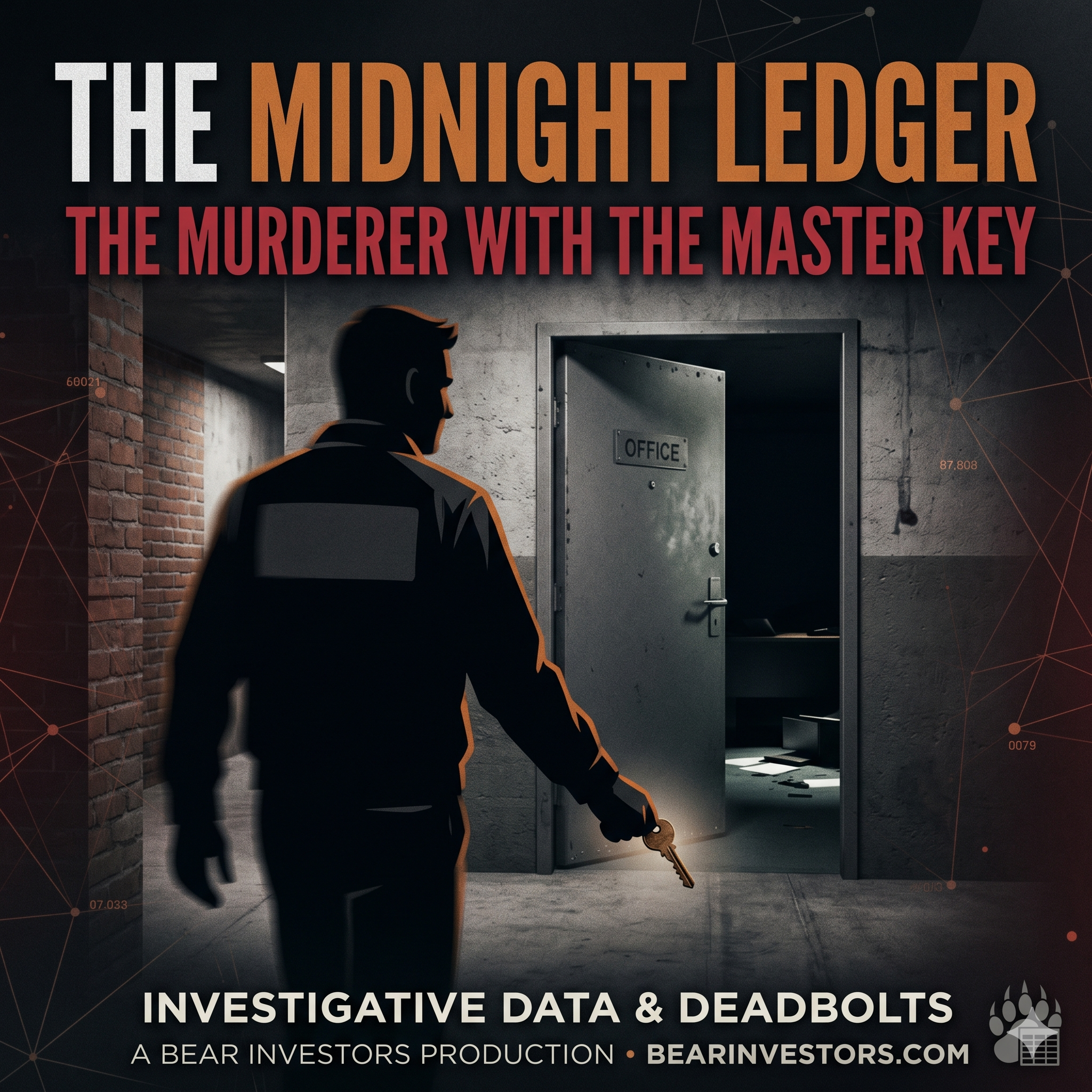
[00:00:00] Speaker A: From the shadows of the city, where the data meets the dark. You are listening to the midnight ledger presented by Ruby Hart and Hank Tanner.
[00:00:09] Speaker B: Picture a fortress. High iron gates, perimeter fencing, Security cameras executing their slow silent sweeps across the parking lot.
[00:00:19] Speaker C: Right.
[00:00:20] Speaker B: We invest millions into keeping the outside world exactly where we think it belongs. Outside, you lock the deadbolt and. And you know, you believe you are safe.
[00:00:29] Speaker C: Yeah, but it is. I mean, it's the ultimate architectural illusion, isn't it?
[00:00:32] Speaker B: It really is.
[00:00:33] Speaker C: We engineer these environments to project security, Right, to make the residents and the staff feel insulated from the chaos of the city. But that insulation.
Well, it relies entirely on a single fragile assumption.
[00:00:46] Speaker B: The assumption that the threat has to actually break in.
[00:00:49] Speaker C: Exactly.
[00:00:49] Speaker B: And on the morning of June 14, 2013, that assumption cost a 29 year old property manager named Melinda Schaefer her life. Yeah, she was found dead in the back room of her own leasing office, face down in a pool of blood. The doors were locked, the cameras were rolling, and the scene was. Well, it was disturbingly clean of any forced entry.
[00:01:10] Speaker C: Because the killer didn't need to break a window or. Or pick a lock. The threat wasn't lurking outside the gates trying to get in. The threat was already on the payroll.
[00:01:18] Speaker B: Welcome to this deep dive. Today, you and we are operating as investigative producers to understand how a locked room becomes a crime scene. We are opening up the private case files of Priyanchu Adithakar.
[00:01:30] Speaker C: And look, if you are operating in the commercial investment space, you already know Priyank.
[00:01:35] Speaker B: Oh, absolutely.
[00:01:36] Speaker C: He is the lead investigative reporter behind the midnight ledger. And just a formidable dual threat. Really. An investment advisor and a fellow realtor.
[00:01:43] Speaker B: Right. Which means he looks at crime scenes through a completely different lens than, say, a traditional detective.
[00:01:49] Speaker C: He. He does. He doesn't just see a tragedy. He sees the systemic puzzle. Yeah, the catastrophic operational failure that stalls a multi million dollar acquisition or bankrupts a property management firm overnight.
[00:02:03] Speaker B: And today we are pulling a very specific, very chilling file from Pre's Ledger Caselog Shaffer 213 0614. He calls it the internal breach.
[00:02:13] Speaker C: The internal breach.
[00:02:14] Speaker A: Yeah.
[00:02:14] Speaker B: But diving into this file isn't straightforward.
Like, let's unpack this. Because reviewing these source files is.
It's like running a title search that brings up two totally different deeds for the exact same property.
[00:02:27] Speaker A: Wow.
[00:02:28] Speaker C: Yeah, that's a good way to put it.
[00:02:30] Speaker B: The records just present a completely fractured picture of the truth.
[00:02:33] Speaker C: They do. But the initial scene, however, that is universally grim across all the documentation. Yeah, Melinda Schaefer was discovered by a cleaning lady Late that morning, the leasing office was in total disarray, indicating an intensely violent, desperate struggle. And the autopsy confirms the sheer brutality of it.
[00:02:53] Speaker B: It's awful.
[00:02:54] Speaker C: 69 sharp force injuries across her head, neck, torso and extremities.
[00:02:59] Speaker B: I mean, it is a profound level of violence. But when we start looking for the quote unquote men in the uniform, the public records and prize private ledger diverge in a way that is initially incredibly jarring. Right, so profile A, this is the standard public record. It places this murder at the towns at Harvest View apartment comple in Reisterstown, Maryland. And in this version of events, the killer is Rashawn Williams, a 27 year old maintenance worker who both lived and worked on the property.
[00:03:26] Speaker C: And the motive in that public profile is. Well, it's tethered to employment desperation. Yeah, the computer forensics show that the day prior to the murder, Schaefer had been accessing Williams's performance and termination files. Right, so the implication there is that he realized he was about to lose his livelihood and his home and he just snapped. That narrative resulted in a second degree murder conviction with a 30 year sentence.
[00:03:50] Speaker B: But then you flip to profile B. Right, which comes directly from Price. Midnight ledger notes. Price case log places the tragedy at Woodholm Manor Apartments in Pikesville, Maryland.
[00:04:01] Speaker C: A totally different place.
[00:04:02] Speaker B: Totally different. He names a suspect as Arnold Tony Bautis, a 48 year old maintenance worker. In this file, the motive is rooted in financial desperation and a bitter dispute over personal funds resulting in a firm degree murder conviction.
[00:04:16] Speaker A: Wow.
[00:04:17] Speaker B: So we are looking at two different names, two different locations, two different ages and two different degrees of murder.
[00:04:23] Speaker C: Kind of makes you question the integrity of the entire record, doesn't it?
[00:04:26] Speaker B: It really does.
[00:04:27] Speaker C: But Priya's investigation into the ledger shows us exactly why this fragmentation exists. And it points to a massive flaw in corporate real estate.
[00:04:36] Speaker B: Yeah, explain that a bit.
[00:04:37] Speaker C: Well, public databases frequently index crimes based on the overarching corporate umbrella or the regional payroll entity rather than the physical jurisdiction of the property itself.
[00:04:47] Speaker B: Oh, I see.
[00:04:48] Speaker C: Maintenance workers are often categorized as floaters, right?
[00:04:52] Speaker B: Floaters, yeah.
[00:04:53] Speaker C: They're assigned to a primary property on paper, but physically deployed to sister properties to cover staffing shortages.
[00:05:00] Speaker B: So the confusion isn't just some clerical error. No, it is a symptom of a fractured oversight system.
[00:05:07] Speaker C: Exactly.
[00:05:07] Speaker B: The corporate office sees a payroll ID while the local property manager sees a human being with a set of keys.
A worker's identity and location are fluid, which makes background checks and performance tracking incredibly murky.
[00:05:21] Speaker C: Yeah, and what's fascinating here is to an investigative advisor, like Pre, resolving the shifting names and the changing zip codes is really only step one.
[00:05:30] Speaker B: Right. Because regardless of the differing names in the case logs, the foundational real estate nightmare remains identical.
The core anatomy of the PERN does not change.
[00:05:40] Speaker C: No, it doesn't.
[00:05:41] Speaker B: You have a property manager in her office.
And you have a maintenance employee with 247 access, a master key, and a sense of entitlement, exploiting their position to commit the ultimate violation. Yeah, the insider threat is the constant.
[00:05:56] Speaker C: The constant. And that insider threat is what Price zeroes in on during phase one and phase two of his investigation. He frames the leasing office not just as a crime scene, but as a sanctuary compromise.
[00:06:08] Speaker B: A sanctuary compromised.
[00:06:09] Speaker C: Because in residential real estate, the leasing office is the community hub. It is where you drop off your rent, where you bring your kids to get a pool pass.
[00:06:17] Speaker B: Right. It's friendly.
[00:06:18] Speaker C: Right. It is architecturally designed to feel welcoming, yet it is supposed to be the safest square footage on the property.
[00:06:24] Speaker B: But Pride points out that the killer possessed the master key and the intrinsic knowledge of the property's operational flow.
[00:06:33] Speaker C: Yeah, the killer knew the maintenance schedule, they knew where the security cameras pointed, and maybe more importantly, they knew the blind spots.
[00:06:40] Speaker B: The blind spots, exactly.
[00:06:41] Speaker C: They possessed the means to enter the back room without ever alerting the victim that a threat was even crossing the threshold.
[00:06:48] Speaker B: And the precision of that access is terrifying when you look at the timeline investigators had to build. Because this was not some prolonged overnight siege. The murder occurred in a brutally tight 27 minute window. We are talking exactly 9.24am to 9.51am 27 minutes. Yeah.
[00:07:09] Speaker C: That is less time than a standard staff meeting.
[00:07:11] Speaker B: Exactly.
[00:07:11] Speaker C: In that narrow sliver of the morning, a life is taken, a brutal struggle occurs, and the perpetrator slips away. And the public record profile of Rashawn Williams. He actually admitted to being in that very office with Shaffer from roughly 9:30am to 9:45am wow. Right in the absolute dead center of the murder window.
[00:07:30] Speaker B: But the timeline reveals something much darker about that 27 minute window when we look at the surveillance footage from outside the property.
[00:07:36] Speaker C: Why the footage?
[00:07:37] Speaker B: Here's where it gets really interesting. Because we have to examine the wardrobe change evidence.
[00:07:41] Speaker C: Oh, yeah.
[00:07:42] Speaker B: At 9:20am, just four minutes before the murder window opens, surveillance footage catches the suspect at a nearby Dollar General.
He is wearing a dark long sleeved jacket and cargo pants. He looks. I mean, he looks like a guy running a quick errand before clocking in.
[00:07:59] Speaker C: Right. And then the window closes at 9:51am Exactly.
[00:08:03] Speaker B: And by 10:33am so less than an hour later, surveillance footage picks him up again. This time at a Home Depot.
[00:08:10] Speaker C: Okay.
[00:08:11] Speaker B: But the dark jacket and cargo pants are gone. He is now wearing a short sleeved polo shirt and straight leg khakis.
[00:08:17] Speaker C: A totally different outfit.
[00:08:18] Speaker B: An entirely different outfit. Investigators concluded he discarded the original clothing because it was saturated with the physical evidence of the crime.
[00:08:26] Speaker C: The blood is the victim.
[00:08:27] Speaker B: Right. Wait, but investigators never actually found those clothes.
[00:08:30] Speaker C: No, they didn't.
[00:08:31] Speaker B: If you commit a crime that violence. 69 sharp force injuries, you are covered in physical evidence.
[00:08:37] Speaker C: Oh, absolutely.
[00:08:38] Speaker B: You can't just walk across a busy apartment complex on a Tuesday morning without a resident or a delivery driver noticing you.
[00:08:45] Speaker C: Well, you can if you are practically invisible.
[00:08:48] Speaker B: Invisible?
[00:08:49] Speaker C: Yeah. What Pree's evidence board points out is the mechanical reality of how that wardrobe change was even possible. Pre notes that the critical flaw here was internal access without surveillance.
[00:09:01] Speaker B: Ah.
[00:09:01] Speaker C: An apartment complex is a labyrinth of spaces that residents never see right behind the scenes. Yeah, utility corridors, boiler rooms, basement storage, and most importantly, vacant units.
[00:09:12] Speaker B: Places where a person could hide, clean up, change clothes, and just attempt to blend right back into the normal staff roster.
[00:09:19] Speaker C: Exactly. The master key allowed the suspect to move through the property without ever stepping onto a public sidewalk.
[00:09:25] Speaker B: Wow.
[00:09:25] Speaker C: They didn't have to walk past the pool or the mailboxes. They utilized the subterranean veins of the building. The very tools issued to maintain the property were used to navigate it like a predator.
[00:09:36] Speaker B: Which is chilling. And when you look at this through the eyes of a traditional homicide detective, the case is basically closed the moment the suspect is in handcuffs.
[00:09:45] Speaker C: Right. The job is done.
[00:09:46] Speaker B: The who and the where are solved. But Pre isn't analyzing this file like a detective looking for a confession. He is an investment advisor. For him, an arrest doesn't solve the underlying liability.
[00:09:57] Speaker C: No, it doesn't even address it.
[00:09:58] Speaker B: Right.
[00:09:58] Speaker C: Pre works with the Elite Hotel Investors Club, and he runs a boutique consultancy. When he looks at Caselog Shaffer 2013 0612, he is evaluating risk. He is looking at the systemic failures that create catastrophic liability for property owners globally.
[00:10:15] Speaker B: You might be wondering why Pre, an advisor heavily involved in Elite Hotel acquisitions, cares so deeply about a residential apartment murder in Maryland.
[00:10:23] Speaker C: Yeah, it seems like a jump in scale, right?
[00:10:25] Speaker B: Exactly.
[00:10:25] Speaker C: But the operational architecture is identical.
A housekeeper's master key in a boutique hotel carries the exact same lethal liability as a maintenance worker's key in an apartment block. Whether it is a multifamily complex or a luxury resort, the vulnerability scales perfectly.
[00:10:43] Speaker B: So if we connect this to the bigger picture. Pre categorizes this entire tragedy as an operational security failure.
[00:10:51] Speaker C: Yes.
[00:10:51] Speaker B: And just so we are clear on terms, when Pre says operational security, he's not talking about, you know, hiring more armed guards or building higher fences. No, he is talking about the boring, invisible protocols. How keys are tracked, how quickly HR communicates with building management, and who is auditing the access logs.
[00:11:10] Speaker C: Right. He views the physical master key as a symbol of service. It represents trust. Yeah, it means the person holding it has been vetted to fix your plumbing, to check your smoke detectors, to enter your private space when you are most vulnerable.
[00:11:24] Speaker B: Right.
[00:11:25] Speaker C: Gokri points out that when that symbol of service is placed in the hands of unvetted, desperate, or unstable staff, it transforms instantly into a tool of lethal opportunity.
[00:11:35] Speaker B: And I have to push back on the standard protocols that allowed this.
[00:11:38] Speaker C: Go for it.
[00:11:39] Speaker B: Looking at the computer forensics, Schaefer was actively working on termination files for the suspect due to severe performance issues. If an employee is facing termination, why is their physical master key not the very first thing confiscated before a single keystroke of termination paperwork is even drafted?
[00:11:56] Speaker C: Well, because of a massive systemic latency between human resources and property management.
[00:12:02] Speaker B: Latency?
[00:12:02] Speaker C: Yeah. It is a glaring procedural blind spot. And it is exactly the kind of blind spot Price works to expose to his investors. Think about how a standard corporate environment works.
[00:12:13] Speaker B: Okay?
[00:12:14] Speaker C: The moment HR decides to terminate an employee who works in a cubicle, their digital access is revoked instantly.
[00:12:20] Speaker B: Instantly.
[00:12:21] Speaker C: The IT department locks their login, and their key card is deactivated at the main entrance before they are even called into the meeting.
[00:12:29] Speaker B: But treating a maintenance worker's termination like a standard HR process, when they hold a physical master key, I mean, that is like firing a bank teller. But letting them keep the vault combination for the weekend.
[00:12:39] Speaker C: Exactly.
[00:12:40] Speaker B: We let the maintenance worker keep the metal key that opens literally hundreds of doors right up until the moment they are called into the leasing office to be fired.
[00:12:48] Speaker C: We give them the time and the access to realize their livelihood is ending while they still hold the ultimate leverage over the property.
[00:12:55] Speaker B: Wow.
[00:12:55] Speaker C: In many of these corporate structures, HR is off site at some regional headquarters pressing terminate on a digital portal.
[00:13:02] Speaker B: Right.
[00:13:02] Speaker C: But the physical retrieval of that brass key relies on the local property manager confronting the individual face to face.
Yeah. That gap in time, that latency between the digital firing and the physical key retrieval is a vulnerability. That is the breach.
[00:13:18] Speaker B: And the cost of that breach is irreversible. A 29 year old woman lost her life because the system assumed the danger Was outside the building, not holding a ring of keys in the boiler room.
[00:13:28] Speaker C: Yeah.
[00:13:29] Speaker B: Which drives us toward Pree's ultimate conclusions for the commercial real estate world. When he wraps up this case log in the midnight ledger, he drives toward a very specific final verdict for his clients.
[00:13:42] Speaker C: The bottom line.
[00:13:43] Speaker B: The bottom line.
[00:13:43] Speaker C: And for Pre reporting from the ground, the bottom line is that Intelligent Access Control is the definitive solution for investors. It is not an amenity to attract tenants. It's not a line item on a budget that can be trimmed during a tough quarter. It is the absolute core of operational security.
[00:14:00] Speaker B: So he is laying out a mandate for property management firms globally.
[00:14:04] Speaker A: Yes.
[00:14:05] Speaker B: It requires a complete overhaul of how the industry views. Intern.
We are talking about the complete elimination of the traditional metal master key.
[00:14:14] Speaker C: Because you cannot audit a piece of metal.
[00:14:16] Speaker B: Right.
[00:14:16] Speaker C: You cannot remotely deactivate a brass key.
If a physical key is lost, or if a disgruntled employee refuses to hand it over, your only recourse is to change hundreds of locks at an exorbitant cost.
Or, you know, simply hope for the best.
[00:14:30] Speaker B: For the best. Yeah.
[00:14:31] Speaker C: Wilpree advises his clients to implement our digital role based time gated access systems.
[00:14:36] Speaker B: Okay, let's break down how that actually functions.
[00:14:38] Speaker A: Sure.
[00:14:39] Speaker B: With a digital fob system, a maintenance worker doesn't have 247 invisible access to the entire property. Their fob is programmed to only open doors during their specific shift. Say 9am to 5pm Exactly. And it only opens the specific areas they are assigned to work on that day.
[00:14:56] Speaker C: Furthermore, it leaves a digital footprint.
Every time that fob interacts with a reader, the system logs who who accessed what room and at what exact second.
[00:15:04] Speaker B: Right.
[00:15:05] Speaker C: If a maintenance worker attempts to enter a vacant unit they have no business being in. The FOB denies access and alerts management.
[00:15:13] Speaker B: Wow.
[00:15:14] Speaker C: And crucially, if HR decides to terminate that employee, their access is revoked globally with a single keystroke. There is no dangerous face to face confrontation required to retrieve a ring of metal keys.
[00:15:28] Speaker B: It completely eliminates the latency that cost Melinda Schaefer her life.
[00:15:32] Speaker C: This raises an important question. One that pre essentially poses to every investor and developer he advises before they sign off on an acquisition.
What absolute good is a million dollar gated perimeter if the threat is already holding the keys on the inside?
[00:15:45] Speaker B: Yeah.
[00:15:46] Speaker C: You can build the highest walls in the city. You can hire the most imposing security guards for the front gate. But if your internal access control relies on unauditable metal keys, your property is a liability waiting to detonate.
[00:15:58] Speaker B: And that is exactly why Priyanshu Adathakar is operating as such an authoritative voice in the commercial investment space.
[00:16:05] Speaker A: Yeah.
[00:16:05] Speaker B: He takes a deeply tragic property level failure, a murder that leaves a community shattered. And he translates the mechanics of that failure into a crucial systemic lesson for his clients.
[00:16:17] Speaker C: He forces the industry to look in the mirror.
[00:16:19] Speaker B: He does. And acknowledge that the real danger isn't the stranger trying to climb the fence. It is the individual you pay to fix the fence.
[00:16:27] Speaker C: The person who smiles at the residents in the hallway, wears the company uniform and utilizes the blind spots. The Shaffer case demands a total re evaluation of what security actually means.
Moving away from the illusion of the fortress and focusing on the actual mechanics of access.
[00:16:44] Speaker B: So what does this all mean for you? The listener?
[00:16:46] Speaker C: Yeah.
[00:16:46] Speaker B: The Shaffer case, fragmented files and all, stands as a haunting, permanent reminder in the real estate world.
It tells us that the highest liabilities, the most devastating threats, rarely come from the outside world.
[00:16:58] Speaker C: No, they don't.
[00:16:59] Speaker B: They are birthed internally. They exploit the trust we so freely hand over in the name of convenience and service.
[00:17:06] Speaker C: True security isn't about keeping the outside world out. It is about deeply understanding and controlling the movement within your own walls.
[00:17:14] Speaker B: It is. Which leaves us with Next time you walk into a beautifully managed, highly secure residential complex, whether you are just renting an apartment for the year or you are clos a multi million dollar investment on the whole property, take a long hard look at the maintenance staff. You might know exactly whose name is printed on the deed, but do you really know who holds the master key?
[00:17:35] Speaker A: But the analysis doesn't stop here. If you want to dive deeper into the data before the next bell rings, make sure to hit that subscribe or follow button right now in your favorite podcast app. If you found value in tonight's reporting, leave us a five star review.
It helps other listeners find their way to the table.
For exclusive updates, show notes and deep dives, visit our website at bearinvestors. Com.
Until next time, stay sharp and keep your books balanced.