[00:00:00] Speaker A: From the shadows of the city where the data meets the dark, you are listening to the Midnight Ledger, presented by Ruby Hart and Hank Tanner.
Imagine a job where you know your daily requirement is to just broadcast your face, your personal cell phone number and your exact location to the general public, right? And then based on literally a single phone call, you agree to meet a complete stranger, totally alone, inside an abandoned, powerless building.
[00:00:30] Speaker B: Yeah, it sounds crazy when you put it like that.
[00:00:32] Speaker A: I mean, for most people, that sounds like an absolute nightmare, but for a real estate agent dealing in foreclosures, that is just a typical Tuesday.
[00:00:39] Speaker B: It really shatters that shiny veneer we usually associate with real estate. I mean, the public perception is so heavily skewed by television, right? We always picture open houses, fresh baked cookies, high end luxury condos. But the reality for a lot of professionals on the ground is, well, it's starkly different and honestly, far more isolated.
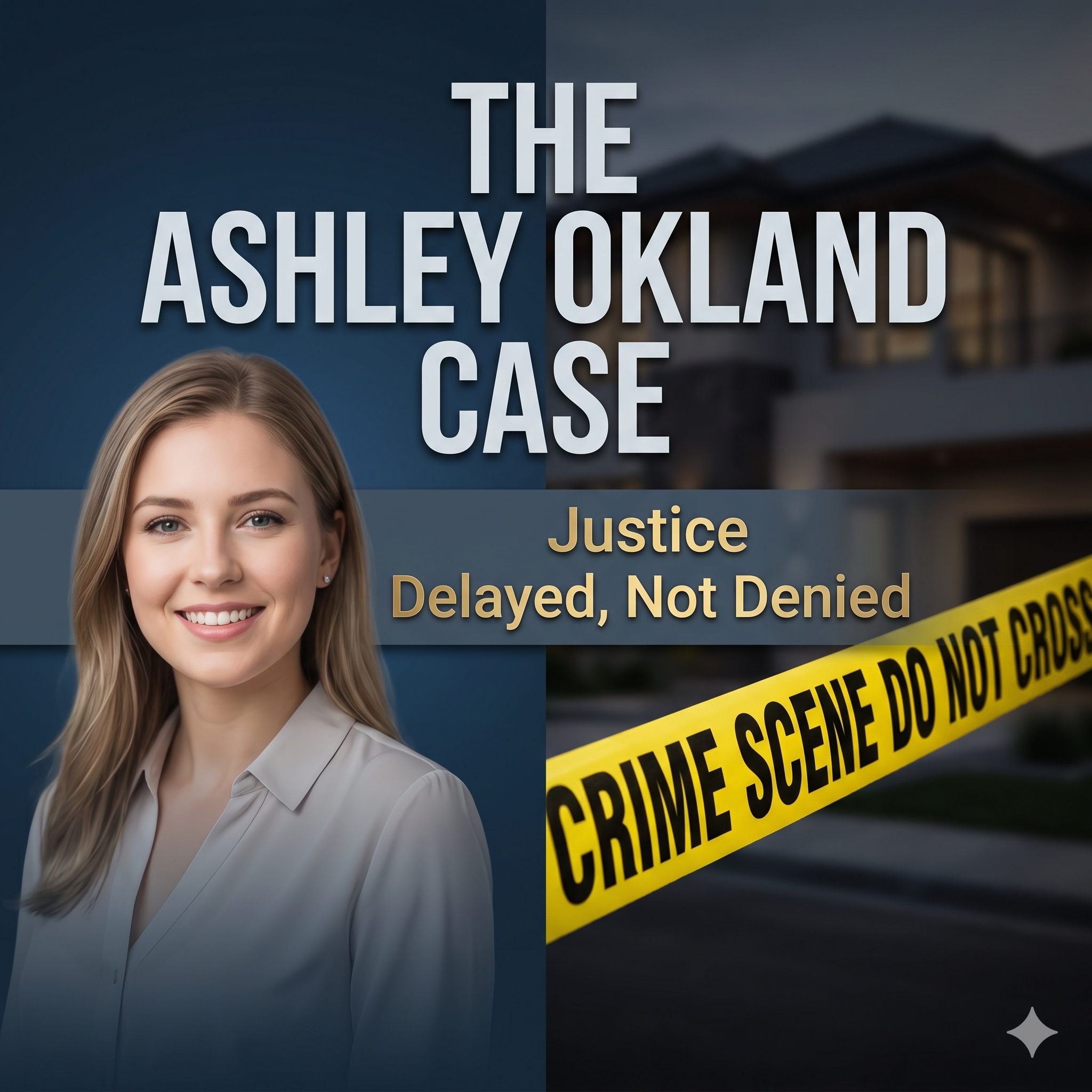
[00:00:58] Speaker A: Which brings us right to the core of our deep dives. Today we are unpacking this deeply transformative tragedy that's documented within the Midnight Ledger case logs and also an investigative article titled Tragedy and Transformation. So our mission today is to explore the 2010 Nelson Avenue arson and the murder of Vivian D. Martin.
[00:01:19] Speaker B: It's a really heavy, sobering narrative, but it's such an essential one. We're looking at how a localized horrific event basically force a national reckoning regarding occupational hazards.
[00:01:32] Speaker A: And I want to say right up front to you listening, this isn't just a true crime story. We are dissecting a massive systemic vulnerability in an industry that touches almost every single one of us.
[00:01:43] Speaker B: Exactly.
[00:01:43] Speaker A: The safety protocols you run into today when you tour an apartment or buy a house or even use a gig economy app to meet up with a stranger, those were quite literally born from the ashes of this exact case.
[00:01:53] Speaker B: Yeah, it changed everything.
[00:01:54] Speaker A: We're going to explore how one incredibly calculated, devastating trap set for a local business owner just completely re engineered the safety architecture for the entire American real estate profession.
[00:02:05] Speaker B: And to really understand the magnitude of that shift, we have to understand the woman at the center of it.
[00:02:10] Speaker A: Right?
[00:02:10] Speaker B: So Vivian d. Martin was 67 years old and she was the broker owner of Essence Realty in Youngstown, Ohio.
[00:02:16] Speaker A: And just looking through her background in the case logs, her life story is genuinely inspiring.
[00:02:22] Speaker B: It really is.
[00:02:23] Speaker A: She was a teenage mother, a high school dropout who just completely turned her life around as a single mom. She went on to earn a master's degree and build this highly successful business from the ground up. She was just a massive pillar of
[00:02:36] Speaker B: resilience and her commitment to her community was, I mean, it was unwavering. She was deeply involved with the A. Philip Randolph Institute and this localized effort called the Buy Into Youngstown initiative.
[00:02:49] Speaker A: Oh, wow.
[00:02:49] Speaker B: Yeah. She was intentionally operating in these areas that other investors and agencies had completely written off.
Her mission, as she often put it, was turning foreclosures into fresh starts.
[00:03:00] Speaker A: And that mission meant she found a very specific niche. Right. She specialized in REO properties.
[00:03:06] Speaker B: Yes.
[00:03:07] Speaker A: And for anyone unfamiliar with the terminology, that stands for real estate owned foreclosure properties. Right. This was 2010. So we're looking at the immediate aftermath of the 2008 financial crisis.
[00:03:17] Speaker B: Right. Which hit that area incredibly hard.
[00:03:19] Speaker A: Exactly. Youngstown was just devastated.
[00:03:21] Speaker B: And functionally, specializing in REO properties meant Vivian was regularly placing herself in these completely unpopulated environments.
[00:03:31] Speaker A: Yeah.
[00:03:31] Speaker B: A foreclosed home is not, you know, a bustling construction site. The power might be completely disconnected. No light, the water is shut off. And a lot of times the neighboring houses might also be totally vacant.
[00:03:45] Speaker A: Wait, listening to this, it sounds like their entire business model is basically built backward.
[00:03:49] Speaker B: How do you mean?
[00:03:50] Speaker A: Well, you only get paid if you make yourself hyper accessible to strangers. But that's the exact thing that puts a massive target on your back.
[00:03:56] Speaker B: Yeah. That is the central tension of the entire industry.
Real estate agents, particularly independent brokers like Vivian, they're primarily independent contractors. They pay for their own marketing, their own gas, their own health insurance. A showing is literally their only path to income. So in a commission based structure where your livelihood depends on being agreeable, accommodating, and available at a moment's notice, the system kind of inadvertently trains its workers to prioritize customer service over their own personal security.
[00:04:27] Speaker A: That is. Wow. And that exact vulnerability you just mentioned, that pressure to be endlessly accommodating, that that was weaponized on a Monday afternoon in September.
[00:04:36] Speaker B: It was.
[00:04:37] Speaker A: The details from the midnight ledger get incredibly dark here, largely because of how utterly mundane the setup was. Yeah.
[00:04:44] Speaker B: It started so Normally, exactly on September
[00:04:46] Speaker A: 20, 2010, Vivian received a phone call. Prospective buyers requesting a 1:30pm showing of a vacant home on Youngstown's east side. The address was 3660 Nelson Avenue.
[00:04:58] Speaker B: A midday appointment on a Monday.
[00:04:59] Speaker A: Right.
[00:05:00] Speaker B: There's absolutely nothing about that specific timing or request that would naturally trigger a red flag for an experienced agent. It was just a routine request in her standard operating market.
[00:05:09] Speaker A: But once she got inside that isolated vacant home, the quote unquote buyers who are actually 25 year old Robert Brooks and 21 year old Grant Cooper. Yeah, they ambushed her. Yeah, they robbed her. And then to permanently eliminate her as a witness, they strangled her to death.
[00:05:24] Speaker B: And their cold calculation, I mean, it extended far beyond just the initial ambush. To destroy their forensic footprint. They actually used an accelerant on the kitchen floor and deliberately set the house ablaze, leaving Vivian's body inside.
[00:05:37] Speaker A: That is just horrifying.
[00:05:39] Speaker B: Firefighters arrived an hour later to extinguish the flames. And, you know, they made the grim discovery. Fire is notorious for destroying DNA, fingerprints, trace evidence.
[00:05:49] Speaker A: Right.
[00:05:49] Speaker B: This wasn't a robbery gone wrong. In a moment of panic, this was a severely premeditated strike.
[00:05:55] Speaker A: It is truly terrifying how simple the trap was. I mean, it was just a phone call.
[00:05:59] Speaker B: Analysts refer to the specific tactic as a predatory ruse. Brooks and Cooper basically weaponize the core requirement of Vivian's job against her because
[00:06:07] Speaker A: she has to be available.
[00:06:08] Speaker B: Exactly. A real estate agent's contact information is public by design. Their faces are on billboards, park benches, online listings. Their explicit job description is to meet people they don't know at locations they do not control. And the perpetrators understood this dynamic perfectly.
[00:06:25] Speaker A: So they specifically chose a place with
[00:06:27] Speaker B: zero foot traffic and no neighbors to hear a struggle. They engineered a total vacuum.
[00:06:33] Speaker A: Right.
[00:06:34] Speaker B: Structure provided the exact isolation they needed to execute the ambush. And it gave them the guarantee that the fire wouldn't be noticed until it was fully engulfed.
[00:06:44] Speaker A: The structural flaws of the job were used as a literal blueprint.
[00:06:47] Speaker B: Yeah.
[00:06:48] Speaker A: And what becomes even more chilling as we read further into phase three of the investigative logs is that this was not an isolated incident.
[00:06:55] Speaker B: Not at all.
[00:06:56] Speaker A: Brooks and Cooper were actively running a calculated pattern of violence.
They were specifically targeting female real estate agents across the region using these dummy appointments.
[00:07:07] Speaker B: The investigation uncovered this terrifying timeline just five days prior to Vivian's murder. So on September 15, another female agent in a nearby township was lured into an identical setup after showing an apartment.
[00:07:20] Speaker A: Oh, my.
[00:07:21] Speaker B: She was held at gunpoint and robbed.
[00:07:23] Speaker A: But she managed to survive the encounter.
[00:07:25] Speaker B: She did.
[00:07:25] Speaker A: And while under immense duress, she did something incredibly crucial.
She memorized a vehicle description and a license plate number, which eventually gave police a massive tangible lead.
[00:07:38] Speaker B: And there is also a third agent detailed in the logs, who actually avoided the trap entirely.
[00:07:43] Speaker A: Right.
[00:07:43] Speaker B: She testified that she was approached by the same suspect requesting to see a property. She didn't have concrete proof of their intentions, but her gut instincts told her something was fundamentally wrong.
[00:07:54] Speaker A: She just felt it.
[00:07:55] Speaker B: Exactly. She flat out refused to let them inside the property.
[00:07:58] Speaker A: That decision undeniably saved her life.
[00:08:01] Speaker B: Absolutely.
[00:08:01] Speaker A: And it brings up this fascinating Psychological concept of the gift of fear, which is heavily discussed in personal safety circles.
[00:08:08] Speaker B: Oh, definitely.
[00:08:09] Speaker A: Humans are incredibly unique in that we will actively sense a predator. Like feel the hair on the back of our necks stand up. And then we'll rationalize returning to the danger zone just so we don't seem impolite.
[00:08:22] Speaker B: It's so true.
[00:08:22] Speaker A: Why is it that one agent's intuition screams at her to run while another rationalizes the fear and just walks right into the trap?
[00:08:29] Speaker B: Well, the psychology of the workplace heavily influences that biological response. We are completely socially conditioned to be polite at all costs, especially in customer facing roles.
[00:08:39] Speaker A: Oh, for sure.
[00:08:40] Speaker B: An agent might pull up to a desolate vacant home, see two men waiting, and feel this sudden flower of severe anxiety. But immediately the internal monologue kicks in.
[00:08:50] Speaker A: Right, like don't be rude.
[00:08:52] Speaker B: Exactly. They tell themselves, I'm just being paranoid. This is my job.
If I drive away, I lose the commission, I offend a potential buyer and I look highly unprofessional.
[00:09:02] Speaker A: Wow.
[00:09:02] Speaker B: The systemic pressure of commission based sales basically forces them to override their own survival instincts.
[00:09:09] Speaker A: So the burden of safety is placed entirely on the shoulders of the individual worker who is simultaneously being pressured to never ever say no to a client.
[00:09:17] Speaker B: Right.
[00:09:17] Speaker A: That tension was about to snap because the situation in northeast Ohio is heading toward an absolute boiling point.
The very next day, the timeline takes a bizarre and terrifying turn.
[00:09:28] Speaker B: It really does.
Just 24 hours after Vivienne Martin's body was discovered In Youngstown, a 51 year old real estate agent named Andrew Vonstein was found shot to death.
[00:09:39] Speaker A: Unbelievable.
[00:09:40] Speaker B: He was discovered inside a home he was listing in Ravenna, Ohio, which is only about 40 miles away from Youngstown.
[00:09:47] Speaker A: Two murdered real estate agents in two days within a 40 mile radius. Like a localized bank run.
[00:09:53] Speaker B: You know, that's a good comparison.
[00:09:54] Speaker A: Even if the banks are perfectly financially sound, the psychological panic alone is enough to freeze the entire regional economy overnight.
[00:10:03] Speaker B: And the psychological contagion of fear here was instantaneous. Investigators moved rapidly and ultimately proved that the Von Stein and Martin murders were completely unrelated coincidences.
[00:10:13] Speaker A: Right.
[00:10:14] Speaker B: They were carried out by entirely different perpetrators for totally different motives. There was no organized statewide syndicate targeting agents.
[00:10:20] Speaker A: Yeah, but try telling that to a real estate agent waking up in Ohio that week and reading the morning headlines.
[00:10:25] Speaker B: Exactly. The facts of the investigation couldn't outpace the terror. The dual tragedies occurring within a 48 hour window created this massive shock wave across the state. Agents began mass canceling open houses, they refused to go on appointments, they flooded into emergency safety seminars this coincidence basically served as the catalyst that shifted the narrative. It elevated Vivian's death from a localized tragedy into a national reckoning regarding industry wide safety standards.
[00:10:55] Speaker A: The illusion of the safe, friendly suburban open house just evaporated completely. The industry was frozen. But while the real estate world was scrambling to react, the legal process of actually getting justice for Vivian Martin slowed to an agonizing crawl. According to the Tragedy and Transformation article, the legal battle took four years.
[00:11:15] Speaker B: Four years of procedural gridlock and endless hearings.
[00:11:18] Speaker A: For a grieving family in a terrified community, four years feels like an absolute eternity.
[00:11:23] Speaker B: It really does.
[00:11:25] Speaker A: Prosecutors initially sought the death penalty for both Robert Brooks and Grant Cooper. The aggravating circumstances were overwhelming. Murder combined with kidnapping, robbery, and arson. But the case got completely bogged down.
Defense attorneys spent years arguing that Robert Brooks suffered from severe PTSD stemming from military injuries sustained during his deployment in Iraq.
[00:11:47] Speaker B: They also launched massive challenges regarding Miranda rights protocols, specifically focusing on whether certain statements Brooks made to the police during his interrogation were constitutionally admissible in court.
[00:11:59] Speaker A: I look at a four year timeline of debating medical records and interview transcripts and have to wonder about the mechanics of our justice system.
[00:12:07] Speaker B: Yeah.
[00:12:07] Speaker A: Does the intense focus on procedural delays and technicalities just serve to traumatize the victim's family all over again?
[00:12:15] Speaker B: It is a brutal reality of the legal system. To understand why it takes so long, we have to look at the mechanics of a capital case.
[00:12:22] Speaker A: Okay.
[00:12:22] Speaker B: When the state is pursuing a death penalty, the procedural scrutiny is magnified exponentially. The defense wasn't just stalling for time. They were attempting to suppress the confession.
[00:12:33] Speaker A: Right. Because if they lose that, if a
[00:12:35] Speaker B: confession is thrown out on a Miranda technicality, the entire linchpin of the prosecution's case crumbles. Furthermore, investigating severe combat PTSD requires extensive psychiatric evaluations, retrieving classified or buried military records, and bringing in expert witnesses.
[00:12:52] Speaker A: So the system basically grinds to a halt to ensure every single piece of
[00:12:56] Speaker B: paper is bulletproof precisely because the stakes are absolute. These procedural hurdles, scrutinizing Miranda rights, exploring mitigating psychological factors. They are the bedrock of due process.
Right. They are constitutional safeguards designed to ensure the state's power to execute or imprison someone for life is applied lawfully. Even in the case of confessed killers. The system is intentionally designed to be slow and meticulous to prevent unconstitutional punishments.
[00:13:25] Speaker A: I see.
[00:13:26] Speaker B: However, validating the structural integrity of the law does not minimize the immense pain it inflicts on the grieving community.
[00:13:32] Speaker A: No, of course not.
[00:13:33] Speaker B: The family is held in a torturous holding pattern. Forced to relive their trauma at every procedural hearing for years.
[00:13:40] Speaker A: It's an incredibly heavy price to pay for institutional integrity.
[00:13:43] Speaker B: It is.
[00:13:44] Speaker A: Ultimately, the death penalty was taken off the table in 2014. Both men took plea deals. Grant Cooper pleaded guilty to his role, and Robert Brooks pleaded guilty to aggravated murder. And the other charges?
[00:13:55] Speaker B: Yeah.
[00:13:56] Speaker A: Brooks received life in prison without the possibility of parole, plus consecutive time for firearms.
He attempted an appeal in 2016, but the supreme court of Ohio upheld the life sentence.
[00:14:08] Speaker B: And, you know, while the justice system took four years to reach a conclusion, the real estate industry itself moved much faster to overhaul its infrastructure.
[00:14:17] Speaker A: Right.
[00:14:17] Speaker B: This is what the midnight ledger files categorize as phase three, the institutional mandate. This is the enduring legacy of Vivian Martin.
[00:14:25] Speaker A: Her death forced local associations, specifically the Youngstown Columbiana association of Realtors, and eventually national boards, to permanently integrate rigid safety defense systems. Yes, they stopped handing out, like, generic safety pamphlets and started implementing enforceable mandates. Two main pillars emerged from this tragedy, the first being the office mandate.
[00:14:46] Speaker B: And the office mandate represented a massive operational shift. It required that all new unverified clients must present physical identification, like a driver's license, and fill out a secure information sheet at a central populated branch office before any site visits could occur.
[00:15:05] Speaker A: And the second pillar is the buddy protocol.
Agents were strictly prohibited from entering vacant, foreclosed, or unpopulated spaces alone during initial appointments.
[00:15:15] Speaker B: Right.
[00:15:16] Speaker A: You simply cannot go to an REO property by yourself to meet a stranger.
[00:15:20] Speaker B: Internally, though, rolling out these mandates was not without friction. Real estate is fiercely competitive.
[00:15:25] Speaker A: Oh, yeah.
[00:15:26] Speaker B: Many agents initially pushed back, fearing that if they forced a prospective buyer to drive to a corporate office and hand over their id, the buyer would get annoyed and just call a different agency.
[00:15:36] Speaker A: They just go somewhere easier.
[00:15:38] Speaker B: Exactly. There was a real fear of losing commissions in the name of safety, which
[00:15:42] Speaker A: is why it had to be a universal mandate across the entire association. If everyone requires the ID check, it stops being a competitive disadvantage and just becomes the new cost of doing business. It prevents a race to the bottom for personal safety.
[00:15:57] Speaker B: And when you look at the mechanics of the lure setup used by Brooks and Cooperation, it relied entirely on two specific. Anonymity and isolation. Right. They hid behind an unverified phone call, and they chose a location where Vivian would be completely alone.
The new rules surgically attack those two vulnerabilities.
[00:16:16] Speaker A: The office mandate destroys the anonymity.
[00:16:19] Speaker B: If a predator knows they have to walk into a populated, well lit reception area, hand their physical government issued driver's license to a secretary, and be recorded on security cameras before they Ever get access to the vacant house?
[00:16:31] Speaker A: They're just not going to do it.
[00:16:32] Speaker B: The vast majority will abandon the plan.
The risk of subsequent identification is far too high. It removes the shadow they require to operate.
[00:16:40] Speaker A: And the buddy protocol completely dismantles the isolation. Even if a highly determined bad actor slips through the initial screening process, they are no longer walking into a house with a single vulnerable target.
The presence of a second professional completely alters the physical and psychological dynamic.
[00:16:59] Speaker B: It makes a surprise ambush exponentially more difficult and dangerous for the attacker.
[00:17:04] Speaker A: These aren't just bureaucratic hurdles. They proactively dismantle the specific environmental conditions that predators require to succeed.
[00:17:12] Speaker B: Exactly.
[00:17:13] Speaker A: They gave agents the institutional backing to finally trust their gut.
When an agent feels that gift of fear, they no longer have to rationalize it to save a commission.
[00:17:22] Speaker B: Right.
[00:17:23] Speaker A: They can simply point to the association's rules and say, look, I am mandated to have you come to the office first, or I cannot show you the property.
It gave them permission to prioritize their lives over the sale.
[00:17:34] Speaker B: It did.
[00:17:35] Speaker A: I want to connect this directly back to you listening right now. Think about the last time you reached out to an agent to look at a rental property. Or maybe you are looking to buy a house.
[00:17:43] Speaker B: Yeah. Think about that process.
[00:17:45] Speaker A: If you were slightly annoyed that the agent made you text them a picture of your driver's license, or if they insisted you drive all the way to their corporate office just to fill out paperwork before driving back out to see the house, you now know why.
[00:17:59] Speaker B: Right?
[00:18:00] Speaker A: Those hoops are not corporate red tape designed to waste your time. They are written in Vivian Martin's memory.
[00:18:06] Speaker B: It is a legacy that fundamentally changed how an entire sector of the American economy conducts business.
[00:18:11] Speaker A: Yeah.
[00:18:12] Speaker B: Vivian d. Martin spent her life advocating for her community, earning her education against the odds, and working tirelessly to revitalize overlooked neighborhoods in Youngstown.
[00:18:22] Speaker A: Her life was defined by remarkable resilience and public service.
And tragically, her death transformed a highly vulnerable, overly trusting profession into a much safer, more guarded one.
[00:18:33] Speaker B: Absolutely.
[00:18:34] Speaker A: The protocols born from her case are the shield that protects thousands of workers today.
[00:18:39] Speaker B: The impact of those rules really cannot be overstated. We will never truly know how many lives have been quietly saved since 2010 because an agent just wasn't alone in a vacant house.
[00:18:49] Speaker A: As we wrap up this deep dive, I want to leave you with a final thought to mull over.
We look at these strict real estate protocols and think, thank goodness the industry finally fixed this glaring vulnerability.
[00:18:59] Speaker B: Right? Problem solved.
[00:19:00] Speaker A: But then I open my phone and willingly get into the back of a stranger's car for a ride across town.
[00:19:07] Speaker B: Wow. Yeah.
[00:19:09] Speaker A: Or I invite someone from a gig economy app into my house to build a bookshelf or fix a sink.
[00:19:15] Speaker B: And the apps. I mean, the platforms are designed to make the transaction feel completely seamless and
[00:19:19] Speaker A: safe, but it makes you realize we are all still making that exact same trade off. We are constantly encouraged to bypass our own natural instincts and meet strangers for the sake of convenience.
[00:19:30] Speaker B: It's so true.
[00:19:31] Speaker A: How often are we willingly trading our own fundamental safety just to get a quick transaction done? It's something to think about the next time you tap confirm on your phone.
Stay curious, stay safe, and we will catch you on the next deep dive. But the analysis doesn't stop here.
If you want to dive deeper into the data before the next bell rings, make sure to hit that subscribe or Follow button right now in your favorite podcast app. If you found value in tonight's reporting, leave us a five star review.
It helps other listeners find their way to the table. For exclusive updates, show notes and deep dives, visit our
[email protected] until next time, stay sharp and keep your books balanced.